“F&I compliance” is a misnomer. It really is “variable ops compliance,” but that name just does not pop. Most compliance concerns are generated during the sales process by salespeople and sales managers, not F&I. But F&I has been anointed as Checkpoint Charlie on deals, perpetuating the mistaken belief that compliance is strictly an F&I function. Sales managers, for the most part, seem to skate on the responsibility or accountability of compliance complications.
In a typical gvo3 review, we check 85 different items on each transaction. One F&I manager whose deals I reviewed today had two violations out of five deals, or two violations out of a possible 425 items reviewed. Both violations were attributable to the sales manager, one for accepting a hold check for five days, the other for working a $25 payment range on a Sharpie four-square. Yet the F&I manager was the one who had compliance issues reported in her name.
This magazine realized the need to differentiate when it changed its name from F&I Management and Technology to F&I and Showroom.
Two of the greatest compliance risks dealers face today are identity theft and credit application fraud. Often, I can track compliance violations in these two hot spots back to the sales manager or salesperson on the deal.
We use a scorecard when reporting the results of our compliance review. The dealer has a potential maximum 333-point deduction If the dealer had the maximum violation in each category. Forty-one percent of those possible point deductions are for violations attributable to the sales department, 40% falls to the F&I department, and 19% is attributable to either or both departments, depending on the dealer’s processes. For example, some dealers require the sales department to check OFAC, whereas other dealers make it an F&I responsibility.
With all that in mind, let’s take a closer look at three compliance issues for which the showroom should take responsibility:
1. Bank Fraud
Over the past few years, a handful of dealer groups have run afoul of assorted Federales for bank fraud. Some of the allegations included straw purchases, powerbooking, and credit application fraud.
In most dealerships, the sales department orchestrates the straw purchase, incorrectly inflates the value of the used vehicle, and massages one or more of the five key credit determinants on the credit application to enhance the likelihood of obtaining a favorable credit decision.
It is usually the sales manager who decides to increase the price of the vehicle to cover a subprime fee, accept a credit card down payment outside of the finance source’s published guidelines, or structure the deal with a hold check or pick pay that is not disclosed to the finance source.
2. Deceptive Sales Practices
Some of the potentially deceptive sales practices on the Federales’ radar include payment packing, executing backup contracts, improving the front-end gross without adding any tangible add-ons, and rebate manipulation. These potential issues are normally sales department functions, not F&I.
We do not review advertising, but the Federal Trade Commission and some state attorneys general are certainly pursuing dealers with false advertising claims. The F&I manager does not place the ad or manage the website. This is strictly a sales function.
3. OFAC, Buyer’s Guides, and Monroney Labels
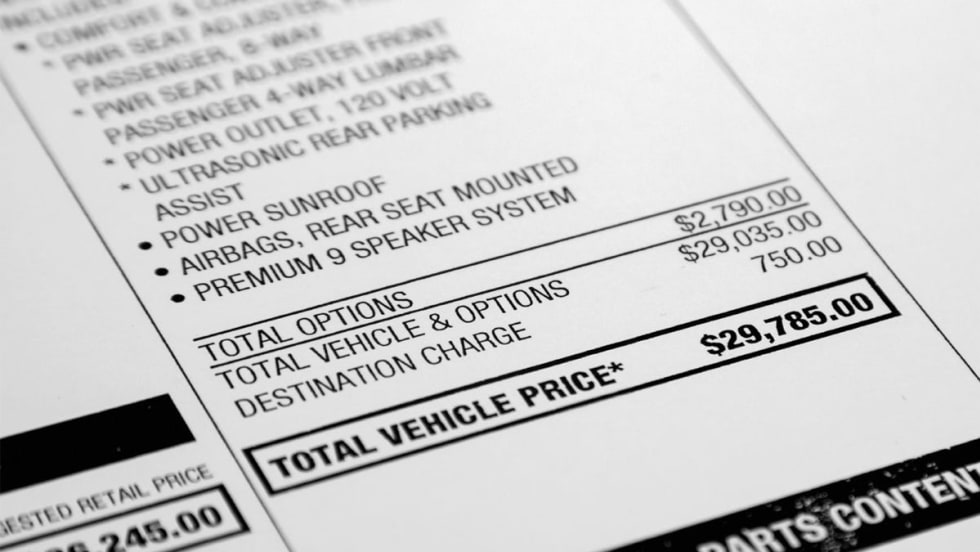
The Federales require compliance in such sales-specific areas as checking OFAC on every transaction, confirming the customer is not a covered borrower under U.S. Department of Defense guidelines, confirming the customer is not an identity thief, safeguarding customer’s nonpublic personal information, and properly displaying used-car buyer’s guides and Monroney labels.
Additional Federales’ requirements normally handled by the sales department or during the sales process include giving the customer a copy of her credit-score disclosure notice and privacy notice and disclosing prior use and recalls.
Dealers and trainers always tout that the F&I manager is the gatekeeper and the one to make sure all the required disclosures and processes are compliant. Placing the final responsibility or blame on the F&I manager does not get to the root of the problem: Salespeople and sales managers create nearly half of a dealer’s compliance nightmares and must be held accountable for managing, documenting, and executing the processes in a compliant manner.
And, yes, good luck and good selling!