I recently received an email from a client, who wrote:
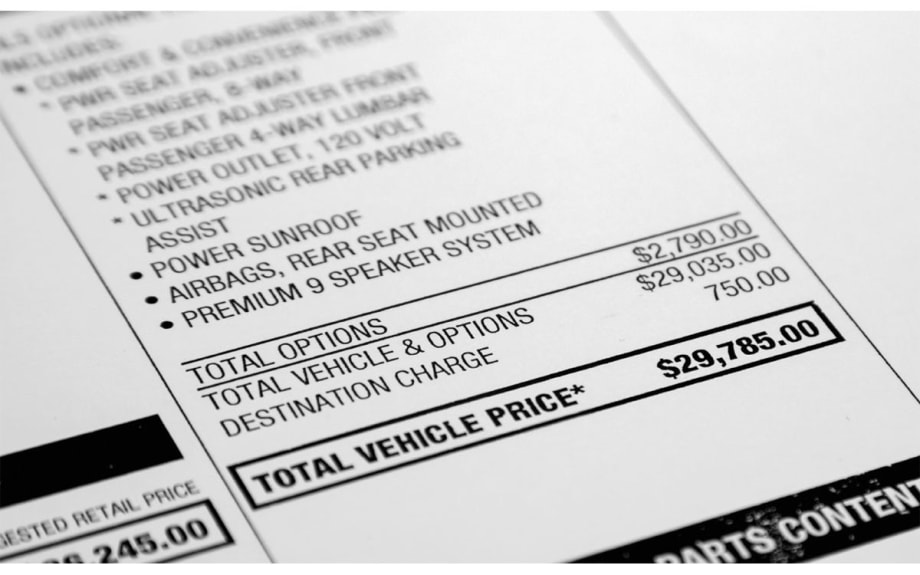
With the increasing shortage on vehicles, we’ve noticed dealers selling cars over MSRP. We’ve also been asked if there is a preferred way to do this. In other words, is it better to have an addendum that includes some perceived value to justify the mark up, or is it okay just to raise the price? Would love to hear your thoughts on this topic.
What that email suggested is, in fact, true: supply chain disruptions, including chip availability, have reduced the availability of certain models. Other new models, such as the mid-engine Chevy Corvette, are enjoying unusually high demand. And as I recall from my Economy 101 class, high demand and low supply will result in higher prices, even prices that exceed MSRP. The question is, may dealers sell above MSRP?
The short answer is yes, you may sell a vehicle for more than the MSRP. The “S”, after all, stands for “suggested.” But if it were that easy, I wouldn’t be writing this article, would I? Here’s where it can get sticky.
Fist of all, it may be illegal in your state to sell a vehicle above MSRP without a supplementary sticker explaining the upcharge. In California, for example, there is an actual statute that says dealers may not sell a vehicle above MSRP unless they affix a supplementary sticker that meets certain requirements, including the term “added mark-up.”
Section 11713.1. Unlawful acts by holder of dealer’s license
It is a violation of this code for the holder of a dealer’s license issued under this article to do any of the following:
(q) Affix on a new vehicle a supplemental price sticker containing a price that represents the dealer’s asking price that exceeds the manufacturer’s suggested retail price unless all of the following occur:
(1) The supplemental sticker clearly and conspicuously discloses in the largest print appearing on the sticker, other than the print size used for the dealer’s name, that the supplemental sticker price is the dealer’s asking price, or words of similar import, and that it is not the manufacturer’s suggested retail price.
(2) The supplemental sticker clearly and conspicuously discloses the manufacturer’s suggested retail price.
(3) The supplemental sticker lists each item that is not included in the manufacturer’s suggested retail price, and discloses the additional price of each item. If the supplemental sticker price is greater than the sum of the manufacturer’s suggested retail price and the price of the items added by the dealer, the supplemental sticker price shall set forth that difference and describe it as “added mark-up.”
In Connecticut there is no statute specifically addressing sales above MSRP. At least two court cases, however, have found that selling above MSRP without a supplemental sticker constitutes a deceptive trade practice.
Does that mean “anything goes” if you’re not doing business in California or Connecticut? Not quite. Here are a couple caveats, wherever you do business:
Never suggest the asking price is higher than the MSRP because of a particular customer’s credit score. That’s a violation of the Equal Credit Opportunity Act. While you may increase the cost of credit based on creditworthiness, you may not increase the cash price of a vehicle.
Transparency is always the best policy, at least when it comes to avoiding lawsuits and ticked-off customers. If you’re charging more than MSRP because market conditions allow you to do so, do it. Just add a clear and conspicuous supplemental sticker that spells it out. You can identify the upcharge as an “Availability Surcharge,” “Market Adjustment,” or “Because We Can.” Just be upfront about it. If the vehicle is that much in demand, you’ll get it.
If you want to add some service or product to the supplemental sticker to add some value and make the upcharge easier to swallow, you’re free to do so and it might be a good idea. But be realistic — mandatory pinstriping for $3,500 is going to cause you more problems than it’s worth. And if you’re in California, check the statute cited above — it has some rules concerning this practice.
And — this is a big one – be sure you advertise the vehicle at the increased cost. If you advertise a vehicle at MSRP and ambush the customer with a higher price on the lot, that violates advertising rules. Remember, you’re generally required to sell vehicles at no more than their advertised prices, regardless of whether or not the customer even saw the ad. You can often avoid this liability in the case of typos and honest mistakes, but intentionally advertising a price that omits your intended mark-up is a no-no.
So yes, you may sell a vehicle for more than the MSRP — just be sure you do it right. And keep those emails coming in — you just might see your answer in this space.
James Ganther Esq. is the president of Mosaic Compliance Services, a lawyer- created company that provides legal compliance services on behalf of retail dealerships. He is also a co-founder of Automotive Compliance Education.