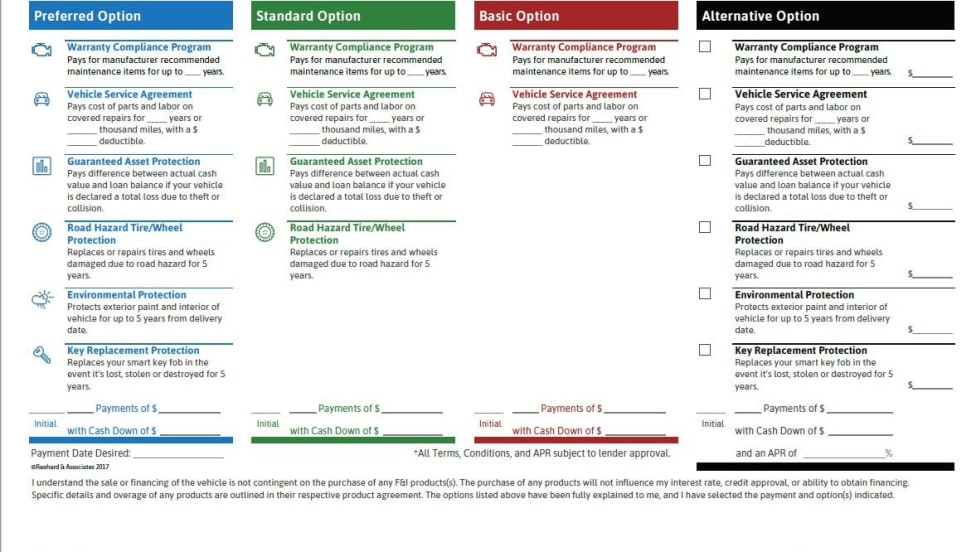
Our question this month comes from J.T. in Lawrence, Kan., home of Lawrence Paper Company. Those folks can make a box for anything. J.T. states: “I’m a big believer in interior and exterior protection. I even bought a package for my personal vehicle. I just have a little bit of trouble getting customers to believe in the products like I do. What would you suggest?”
J.T., it’s always frustrating when you firmly believe in the value of something, know it would benefit someone, and they definitely need it, but you just can’t get them on board with the idea. I have the same problem when it comes to sex: My feature-advantage-benefit presentation never works.
Obviously, to sell environmental protection, you must first discover your customer’s need for the product so you can tailor your presentation to his or her unique situation. You must then educate the customer on why it’s critical on today’s vehicles. Some typical needs discovery questions would include:
Questions: How long do you plan on keeping this vehicle? Where is it going to be parked at night? What about during the day?
Why Ask: The more time a vehicle spends exposed to the elements, the more important environmental protection becomes.
Questions: What color is your new vehicle? What color is the interior?
Why Ask: Dark exterior colors are more susceptible to fading and discoloration, while light interiors are more likely to show grease, grime, and stains.
Questions: How many kids (or grandkids) do you have? How old are they?
Why Ask: We have to help them see those drink spills, ketchup splatters, and French fry grease stains that are bound to happen when their kids or grandkids eat in the car.
Questions: How familiar are you with the changes in paint?
Why Ask: Hey, most customers don’t know the paint on a new vehicle is truly a technological wonder, and explaining how it’s applied will help them understand why environmental protection is absolutely critical on today’s vehicles.
See, waterborne thermosetting enamels and computer-controlled robots that use less paint and apply it more evenly have forever changed the way vehicles are painted. In fact, the paint used in your body shop is chemically different than the paint used at the manufacturing plant. And virtually every vehicle manufacturer uses thermosetting enamels that cure once the paint heats to its set point, which causes a chemical reaction. That’s why a manufacturing plant can begin assembling a car 30 minutes after its painted.
These changes in automotive paint have increased the need to protect a vehicle’s exterior from environmental hazards. So contrary to popular belief, today’s vehicles do not have more paint, they have less. While a clearcoat does help protect the underlying color coat, the use of waterborne paint allows them both to be much thinner because the clearcoat provides the glossy finish. Plus, both are applied robotically, allowing the total paint thickness on a new vehicle, including primer, to be four to seven thousandths of an inch thick. That equates to the thickness of a sheet of paper.
So when customers say they’re not familiar with the changes in automotive paint, you can educate them by saying something like: “Today’s waterborne thermosetting enamels and clear coats, which are applied robotically, have made the factory paint much more susceptible to environmental damage, which, as I’m sure you know, is specifically excluded by the manufacturer’s warranty. Unfortunately, the changes in paint have also dramatically increased the cost of repairing it, which is why it’s so important to protect it from environmental hazards. And remember, what impacts the value of a used vehicle more than anything else is its exterior and interior appearance. And when it comes time for your next vehicle, you’re going to want to get as much for this one as possible, right?”
Once you get a positive response, you’ve earned the right to go for the close. J.T., thanks for your question. Your YETI is on the way! Check out my So Here’s the Deal blog at www.fi-magazine.com to watch my complete video response to J.T.’s question and others. And don’t forget to submit your own video for a chance to get your question answered and a free YETI. As always, it’s a beautiful day to help a customer!
Ron Reahard is president of Reahard & Associates Inc., a training company providing F&I classes, workshops, in-dealership and online training. Got a question or objection for Ron? Use your mobile phone to record a brief video (shot landscape style!) of your question and upload it to go-reahard.com/ask-ron/