Sales and F&I have to put all kinds of numbers into the DMS, including phone numbers, addresses, birth dates, social security numbers, insurance information, as well as sales price, taxes, fees, plus all the products we sell.
We should scrutinize any document the customer provides.
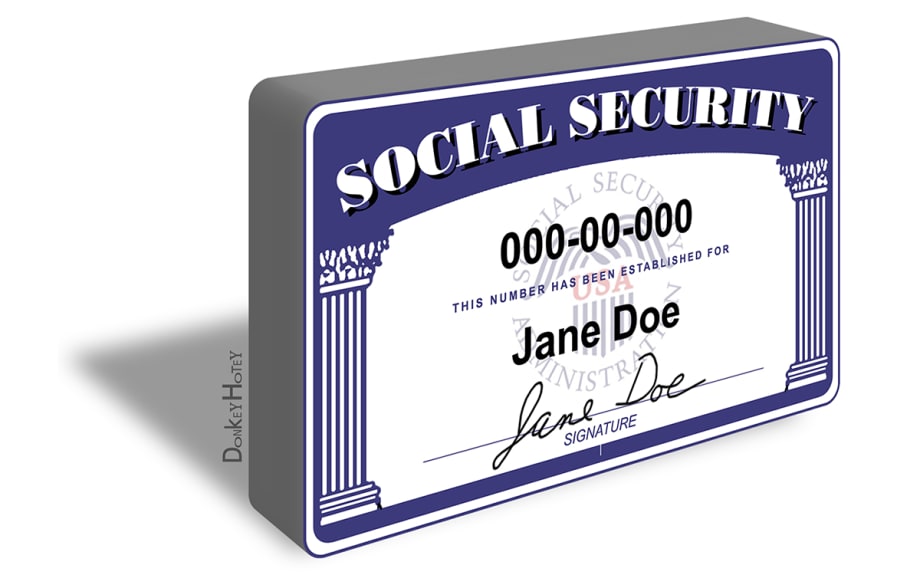
Of all those numbers, the social security number is the most critical for finance and lease deals. If we need to get a copy of the card, do we know what a legitimate card looks like?
Versions
There are three versions issued by the Social Security Administration, and we’re likely to see any of those three on credit applications.
The first is the most common because it’s issued to U.S. citizens and people lawfully admitted to the country on a permanent basis. It has the name and number printed on the card, and the issue date is printed in the lower right part of the card for anything issued after November 2006.
The second version is for temporary workers. In addition to the name and number on the card, the words “valid for work only with DHS authorization” appear on the front.
The final version is for those who lawfully enter the U.S. but are not approved to work. The number issued by the Social Security Administration is an ITIN (Individual Taxpayer Identification Number). It looks like a regular social security card but has the words “not valid for employment” on the front.
Security measures
We should scrutinize any document the customer provides, whether it’s a DL, POI, POR, or a social security card. That means we need to know the security measures in place.
Front of the card: The front of the card should always have a seal and the words “Social Security” across the top. Additionally, the words “This number has been established for” should appear between the name and the number.
Back of the card: The back of the card includes a mailing address for lost cards, the cardstock sequence number, and the card’s official form number. Bad guys might do a good job of duplicating the front, but they’ll likely forget the back. Make sure you get a copy of the back of the card as well.
Card paper: The card itself is part of the security. It’s on heavier paper than regular paper, and it should show evidence of perforation on at least one side. The paper has blue tint, but it also should have flecks of yellow, pink, or blue disks imbedded called “planchettes.” Hold the card at different angles to see if the planchettes are visible.
Printing: Different printing methods are also part of the security. Think mountains and valleys for the two versions. The name and number are printed using the “intaglio” method which is caused by impacting the paper and then flooding the resulting crevices (valleys) with ink. Everything else is printed in the “relief” method which is the opposite. Relief printing is where ink is on the raised portion of the letters (mountain). The result for both options creates a tangible mechanism for feeling the ink. We should be able to feel the difference between the print on a real card versus a fake card using laser printing which would be smooth.
We often need to make a copy of a document for our deal jacket, but we need to slow down long enough to verify that what we just copied is the real thing. Be sure to know which version you should see and double-check the security measures. If a Red Flag appears that says the number was never issued by the Social Security Administration, be very cautious.
Lori Church is an experienced F&I manager, a graduate of the University of Denver’s Sturn College of Law, and director of compliance for Holman Automotive.
Read: Do It Anyway