


 MENU
MENU SEARCHMENUSEARCH
The bureau concedes in its report that consumers are financing larger amounts and are electing for longer-term loans to keep monthly payments affordable. However, the regulator also notes that longer-term loans aren't having the desired effect in terms of default rates.
Read More →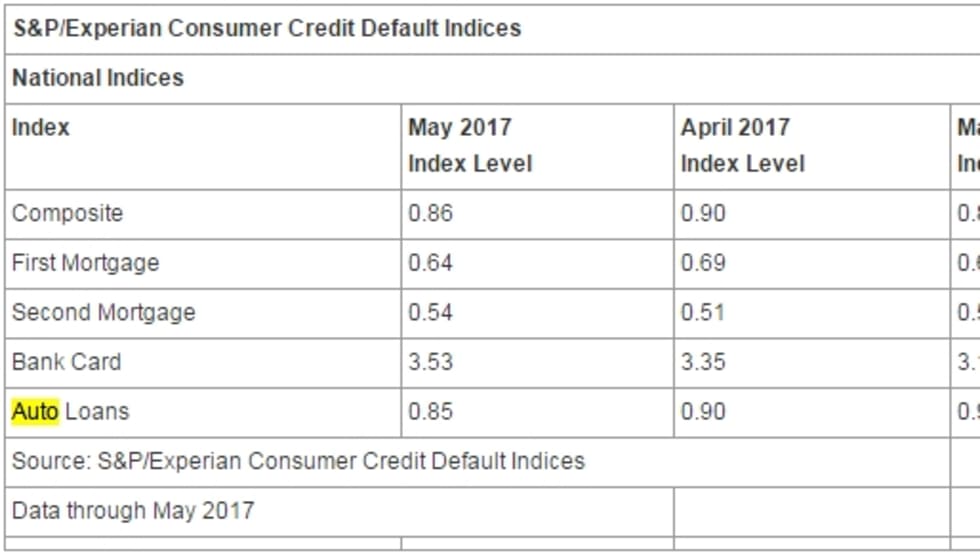
Auto loan defaults fell to a 10-year low in May, squashing concerns about a forming subprime auto loan bubble. But not all consumer credit categories were a picture of health in May.
Read More →
Default rates inched up in August across multiple consumer credit categories, including auto loans and mortgages, according to data released by S&P Dow Jones Indices and Experian.
Read More →Consumer credit defaults remained relatively stable in July, according to data from S&P Dow Jones Indices and Experian. The on exception were auto loans, which showed an increase in defaults.
Read More →According to S&P and Experian, consumer credit defaults continue to rise, with the bank card default rate leading the way. The auto loan default rate also increased.
Read More →While consumer credit quality continues to look healthy, the national composite was 1.38 percent in September, slightly up from 1.34 percent in August.
Read More →The auto loan default rate rose slightly from January to February, but remains below year-ago levels. The two firms also report that overall consumer credit remains healthy.
Read More →Auto was the only loan type to show an increase in its default rate, but officials with the S&P/Experian Consumer Credit Default Indices don’t seem concerned.
Read More →Default rates for all loan types except bank cards fell for the fourth consecutive month, reaching their lowest levels since at least the end of the recent economic crisis.
Read More →Data from the S&P/Experian Consumer Credit Default Indices indicated that the auto loan default rate inched up from July to August.
Read More →