FI showroom red and grey logo
MenuMENU
SearchSEARCH

KBB Breaks Down Auto Brand Popularity By Region

According to The KBB.com’s Market Intelligence research, a region’s most popular brands are often headquartered or have assembly plants in that area. The data suggests that shoppers have strong brand loyalty and research the manufacturers with local ties to their region.

by Staff
January 7, 2014
4 min to read


IRVINE, Calif. — When looking at top brands by region, KBB.com found that consumers tend to be loyal to makes that are headquartered or have assembly plants in that area. The vehicle information site’s findings suggest that shoppers have strong brand loyalty, especially if the OEM has local ties to the region.

In-market new-car shoppers, according to KBB’s Market Intelligence research, from the Western region of the United States are 85% more likely to consider Tesla than shoppers from other regions. And out of all regions, Southerners were least influenced by brand when shopping for a car, as evidenced by a relatively small 17% preference for Infiniti over other brands. Midwest shoppers, however, are 64 percent more likely to consider Chrysler, while Northeast shoppers are 56 percent more likely to consider Subaru.

Ad Loading...

Most Popular Automotive Brands by U.S Region

U.S. Region*

Make

Higher Likelihood to Shop Brand Compared to Other U.S. Regions**

West

Tesla

85%

West

Scion

68%

Midwest

Chrysler

64%

Midwest

Buick

53%

South

Infiniti

17%

South

RAM

14%

Northeast

Subaru

56%

Northeast

Volvo

45%

Least Popular Automotive Brands by U.S Region

U.S. Region*

Make

Lower Likelihood to Shop Brand Compared to Other U.S. Regions**

West

Buick

36%

West

Chrysler

30%

Midwest

Mercedes-Benz

37%

Midwest

BMW

33%

South

Subaru

42%

South

Tesla

22%

Northeast

RAM

27%

Northeast

Scion

26%


“It seems what is popular in one region is overlooked in another,” said Arthur Henry, analyst at Kelley Blue Book. “Westerners prefer fuel-efficient brands with style, such as Tesla and Scion, but those same brands are shunned in the South and Northeast.

“Those living in the South gravitate toward brands that are manufactured in the same region,” he added. “Shoppers from the Midwest also have an affinity for brands headquartered or produced in their own backyard.”

Although the domestic automakers have very low market penetration in the West, both Chrysler and Buick resonate with Midwestern shoppers more than in any other region, due to brand loyalty and their overall support for the American brands. Midwestern new-car shoppers are 64% and 53% more likely to consider Chrysler and Buick, respectively. However, they are least likely to shop for import luxury brands such as Mercedes-Benz and BMW and all compact luxury cars.

Ad Loading...

“Known as the truck belt in America, Southern shoppers are more likely to consider RAM models than shoppers from any other U.S. region,” said Karl Brauer, senior analyst at Kelley Blue Book. “While Southerners are drawn to the ruggedness and durability the RAM truck brand offers, they also are more likely to shop for a traditional luxury brand like Infiniti than shoppers from other parts of the country due to its headquarters in Tennessee.”

Most Popular Segment by U.S Region

U.S. Region*

Segment

Higher Likelihood to Shop Segment Compared to Other U.S. Regions**

West

Hybrid Car

66%

Midwest

Full-Size Crossover

42%

South

Full-Size Sport Utility

41%

Northeast

Compact Crossover

20%

Least Popular Segment by U.S Region

U.S. Region*

Segment

Lower Likelihood to Shop Segment Compared to Other U.S. Regions**

West

Full-Size Crossover

24%

Midwest

Compact Luxury

34%

South

Hybrid Car

19%

Northeast

Full-Size Sport Utility

33%


KBB.com research also found Western new-car shoppers are 66% more likely to consider a hybrid car, while Midwest car shoppers are 42% more likely to consider a full-size crossover. Southern shoppers are 41% more likely to consider a full-size sport utility, followed by Northeast consumers, which are 20% more likely to shop for a compact crossover.

“Western-based, new-car shoppers are more likely to shop for a hybrid car and least likely to shop for a full-size crossover, as a result of higher gas prices in states like California,” said Brauer. “Westerners today are not only budget-conscious at the gas pump, they appear more environmentally mindful than ever before, and we are seeing this translate to the car they are shopping.”

Ad Loading...

In addition, the KBB.com data revealed major differences in the popular and unpopular segments for each U.S. region, which is similar to the data results for the auto brands.

“Based on actual shopping data on KBB.com, hybrids are synonymous with the West, as SUVs are with the South,” said Henry. “Seeing the key drivers motivating shoppers are topography, metropolitan density and government regulations, it is not surprising compact crossovers are preferred over full-size SUVs in the Northeast. This shows when brand choice is layered on top of segment preferences, manufacturers like Subaru rise to the top with its four-wheel drive options, along with Volvo and its high safety ratings, which help both brands drive interest in this region.”


More F&I

F&Iby Lauren LawrenceFebruary 25, 2026

Report Finds Year-End F&I Strength

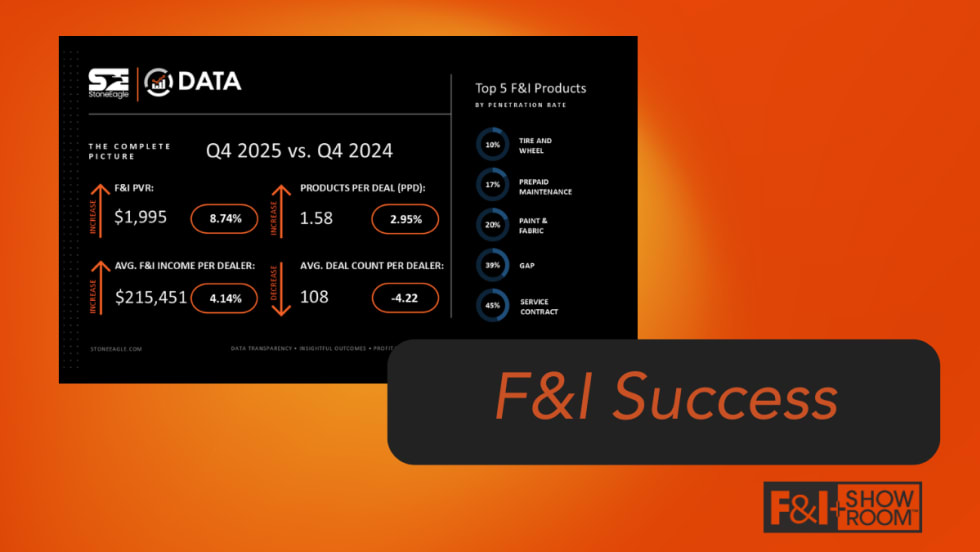
Deal volume ebbed and flowed throughout 2025, but product performance remained steady, according to automotive technology and data intelligence solutions provider StoneEagle.

Read More →
F&Iby Hannah MitchellFebruary 23, 2026

Some Auto Brands Cheaper to Insure

A new top 10 list ranks the least expensive for average full insurance coverage on a clean driving record and high driver credit scores.

Read More →
F&IFebruary 13, 2026

Business Office Blueprint

Try following these 20 steps to greater success in the dealer F&I office this year.

Read More →
Ad Loading...
Industryby Lauren LawrenceFebruary 11, 2026

Insurance Shopping on the Rise

A TransUnion study found that relationship-driven sales models proved to be important, as consumers who used an agent had a lower shopping intensity than those going it alone.

Read More →
Industryby Hannah MitchellFebruary 4, 2026

Auto Insurance Cost Reprieve

2025 brought consumers relief after years of rate hikes, but 2026 could bring renewed policy pain, depending on how U.S. trade policy affects prices.

Read More →
Reese Dailey from Automotive Training Academy by Assurant
F&IFebruary 4, 2026

Cash Deal Strategies

In this video, Reese Dailey of the Automotive Training Academy by Assurant reveals strategies to make cash deals profitable without relying on monthly payment bumps.

Read More →
Ad Loading...
Cox Automotive and Dealertrack logos displayed over a dealership showroom background.
F&Iby StaffFebruary 3, 2026

Cox Auto Says Dealertrack Offers Greater Finance Efficiency

Suite of new APIs, product enhancements and integrations is designed to help maximize contracting and funding efficiency for lenders and their dealer partners.

Read More →
F&Iby Hannah MitchellJanuary 12, 2026

Auto Credit Access Loosens

December brought some of the best borrowing availability for consumers in years, though lenders tightened their reins on riskier segments of the market.

Read More →
F&IJanuary 7, 2026

Resistance to the Menu

In this video, Reese Dailey of the Automotive Training Academy by Assurant explains how to handle a customer who isn’t willing to listen to your pitch.

Read More →
Ad Loading...
two-vehicle rear-end collision
F&Iby Lauren LawrenceJanuary 7, 2026

EV Collision Claims Spike

Third-quarter battery electric vehicle insurance claims were up 4% year-over-year. A new report says EV claims cost the most due to complex technology and limited after-market parts supply.

Read More →