


 MENU
MENU SEARCHMENUSEARCH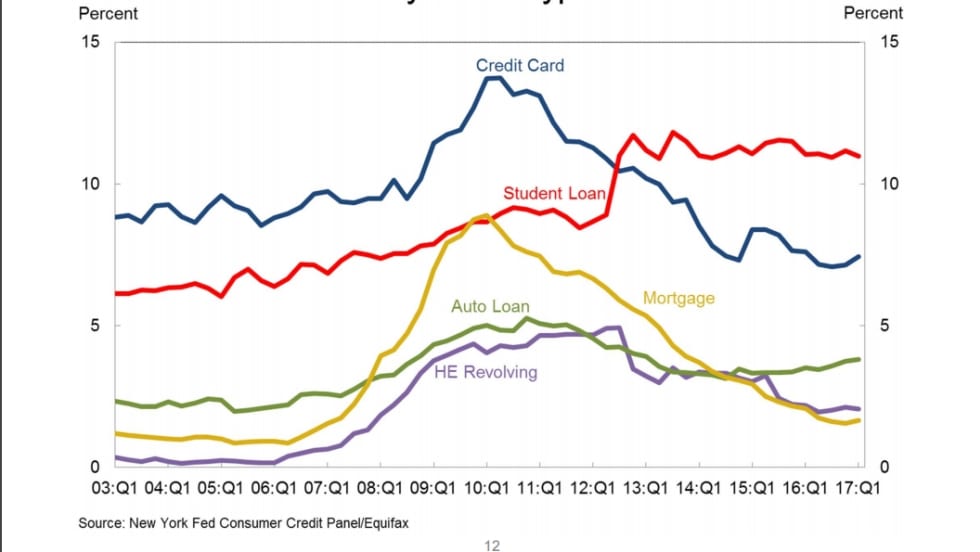
The feat comes almost nine years after the Great Recession, when household debt reached $12.68 trillion. But the debt and its borrowers look quite different today, the New York Fed noted, and auto finance sources showed signs of tightening in response to some deterioration in auto loan performance.
Read More →
The average household is on the verge of being priced out of the new-vehicle market, Experian’s fourth quarter data shows.
Read More →
We hate to burst your bubble, but there is no bubble to burst. Auto finance expert breaks down the third-quarter results.
Read More →
Transunion projects the auto loan delinquency rate for consumers with payments 60 or more days past due to close the year at 1.4%, the highest level since year-end 2009. Even with this increase, TransUnion said delinquency rates will remain well below levels observed during the last recession.
Read More →CU Direct's credit union network was the No. 3 auto loan originator in the first quarter. However, the network posted the highest year-over-year growth in auto originations.
Read More →According to the American Bankers Association, indirect auto loan delinquencies were one of the categories to show a decrease, while delinquencies in the direct auto loan space showed an increase.
Read More →TransUnion expects the average auto loan debt per borrower to increase to $18,509 by the end of 2016, a more than $3,500 increase since the Great Recession. The firm noted, however, that subprime auto loans still make up less than the 23.7% share recorded in the third quarter 2009.
Read More →Despite auto loan balances rising by $101 billion, delinquencies remained flat from a year ago. Officials with the credit reporting agency said their seeing controlled and deliberate growth by lenders.
Read More →
Delinquencies remained in check despite total outstanding auto loan balances rising to an all-time high, signaling a healthy automotive credit climate.
Read More →In the first quarter of 2015, the percentage of automotive loans that fell within the subprime and deep subprime risk categories made up 19.7% of the market — the lowest share since 2012, according to Experian Automotive.
Read More →