FI showroom red and grey logo
MenuMENU
SearchSEARCH

FTC Reminds Businesses of Duties to Victims of Identity Theft

The Fair Credit Reporting Act’s ‘business records turnover provision’ requires that business provide free of charge and without subpoena records relating to the theft within 30 days of a victim’s written request.

December 18, 2017
3 min to read


WASHINGTON, D.C. — The Federal Trade Commission reminded businesses on Monday of their duties under federal law if they suffer a data breach. Specifically, businesses are required to provide identity theft victims — or law enforcement at the victim’s request — with a copy of records relating to the theft.

The requirement, or what is called “the business records turnover provision,” falls under the Fair Credit Reporting Act (FCRA). It says businesses must provide free of charge and without subpoena the records relating to the theft within 30 days of a victim’s written request.  

Ad Loading...

“Identity theft victims may need the records to document the crime or clear up their good name,” FTC attorney Amanda Koulousias wrote in a blog posted to the regulator’s site. “You want to help them and you know you need to comply with the law. So, make sure you have policies in place for responding to victims’ requests for records.”

Koulousias also recommended that businesses know what types of records they have. Examples listed include applications, account statements, receipts, customer service notes associated with the transaction, and records showing where merchandise was purchased or shipped.

“If you know what you have, then you can better ensure that victims are provided all types of records related to the identity theft,” Koulousias wrote.

The FTC attorney noted that the FCRA’s business record turnover provision applies to all different types of identity theft, including new accounts opened, as well as purchases on existing accounting. “That’s why it’s important to evaluate your policies periodically to make sure they include new types of identity theft as they emerge,” she wrote.

Even if the victim has received records before, the FCRA requires that businesses provide the records requested by the consumer. “Victims may not have kept the copies they previously received, especially if the identity theft happened some time ago,” Koulousias wrote, in part. “Denying the victim’s request because the victim previously had access to the records does not comply with Section 609(e).”

Ad Loading...

Businesses can refuse to provide records if they are not sure of the victim’s identity. According to the blog post, the FCRA allows businesses to ask for proof of identity, such as a copy of a government-issued identification.

“You may also ask for proof of a claim of identity theft, such as an Identity Theft Report issued by the FTC of a police report,” Koulousias noted. “An FTC Identity Theft report subjects the person filing the report to criminal penalties if the information is false, and businesses can treat it as they would a police report.

“After receiving those documents, if, in good faith, you can’t verify the victim’s identity or believe the request for records was based on a misrepresentation, you may decline to provide the records.”


More F&I

F&Iby Lauren LawrenceFebruary 25, 2026

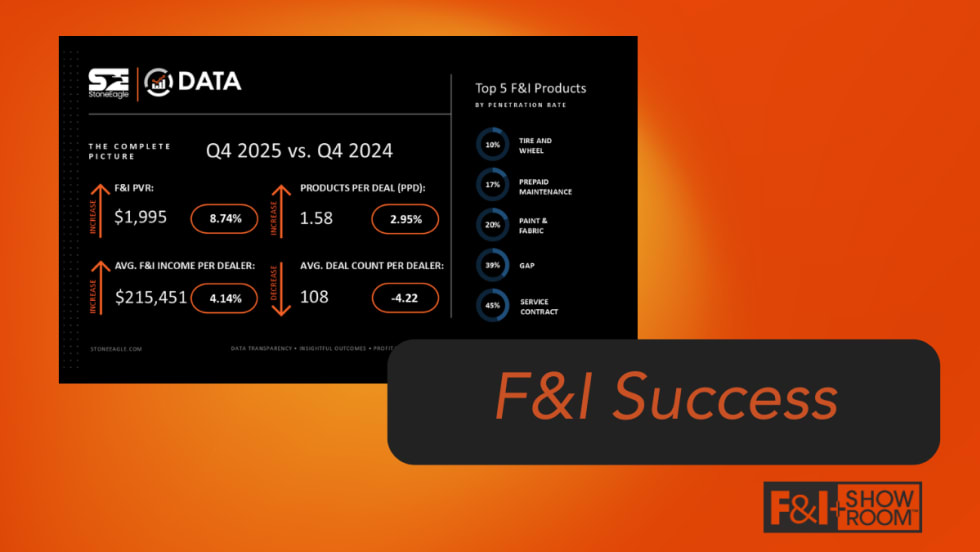
Report Finds Year-End F&I Strength

Deal volume ebbed and flowed throughout 2025, but product performance remained steady, according to automotive technology and data intelligence solutions provider StoneEagle.

Read More →
F&Iby Hannah MitchellFebruary 23, 2026

Some Auto Brands Cheaper to Insure

A new top 10 list ranks the least expensive for average full insurance coverage on a clean driving record and high driver credit scores.

Read More →
F&IFebruary 13, 2026

Business Office Blueprint

Try following these 20 steps to greater success in the dealer F&I office this year.

Read More →
Ad Loading...
Industryby Lauren LawrenceFebruary 11, 2026

Insurance Shopping on the Rise

A TransUnion study found that relationship-driven sales models proved to be important, as consumers who used an agent had a lower shopping intensity than those going it alone.

Read More →
Industryby Hannah MitchellFebruary 4, 2026

Auto Insurance Cost Reprieve

2025 brought consumers relief after years of rate hikes, but 2026 could bring renewed policy pain, depending on how U.S. trade policy affects prices.

Read More →
Reese Dailey from Automotive Training Academy by Assurant
F&IFebruary 4, 2026

Cash Deal Strategies

In this video, Reese Dailey of the Automotive Training Academy by Assurant reveals strategies to make cash deals profitable without relying on monthly payment bumps.

Read More →
Ad Loading...
Cox Automotive and Dealertrack logos displayed over a dealership showroom background.
F&Iby StaffFebruary 3, 2026

Cox Auto Says Dealertrack Offers Greater Finance Efficiency

Suite of new APIs, product enhancements and integrations is designed to help maximize contracting and funding efficiency for lenders and their dealer partners.

Read More →
F&Iby Hannah MitchellJanuary 12, 2026

Auto Credit Access Loosens

December brought some of the best borrowing availability for consumers in years, though lenders tightened their reins on riskier segments of the market.

Read More →
F&IJanuary 7, 2026

Resistance to the Menu

In this video, Reese Dailey of the Automotive Training Academy by Assurant explains how to handle a customer who isn’t willing to listen to your pitch.

Read More →
Ad Loading...
two-vehicle rear-end collision
F&Iby Lauren LawrenceJanuary 7, 2026

EV Collision Claims Spike

Third-quarter battery electric vehicle insurance claims were up 4% year-over-year. A new report says EV claims cost the most due to complex technology and limited after-market parts supply.

Read More →