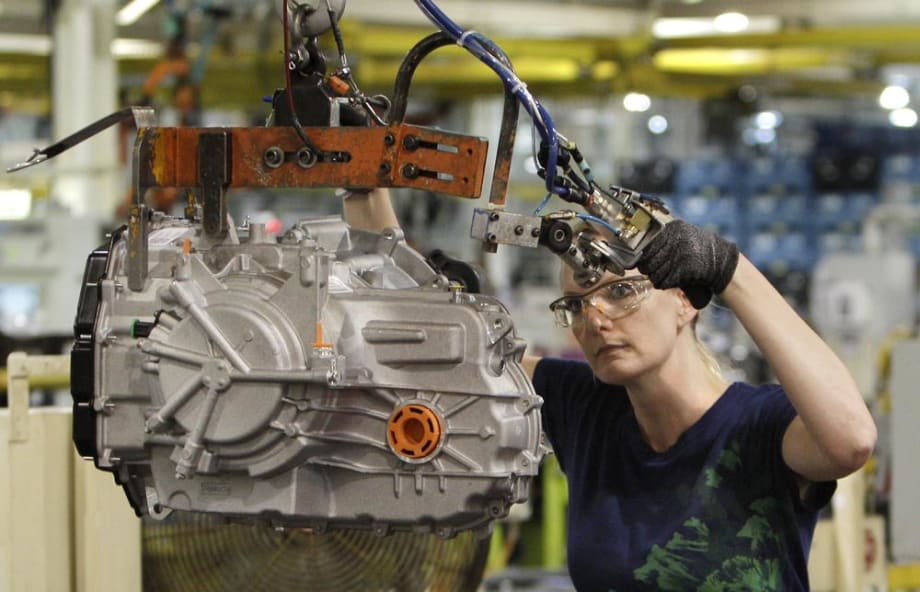
Amazon, Apple and other major employers raised wages as inflation skyrocketed over the past year. But automakers kept wages largely status quo. But soon General Motors, Ford Motor and Stellantis may need to take a new stance on wages as the Big Three negotiate a four-year labor contract for 150,000 employees.
In 2019, GM workers went on strike for 40 days in contentious contract negotiations. The strike cost the automaker $2.9 billion in lost earnings. The hot button issues that led to the strike included the use of temporary employees and a two-tier wage scale.
Today rising prices are eroding wages at the same time that automakers’ profits have hit record higher over escalating vehicle prices. This trend gives the UAW added leverage for the upcoming contract negotiations.
“The wage demand will always be there, but it’s going to be especially acute at the upcoming negotiations because of the high inflation rate,” says Art Wheaton, a labor professor at Cornell, told Bloomberg. “They’ve gone lots of years without getting decent base-pay wages,” which the union traded for profit-sharing, he says.
Automakers have been profitable for the last decade but automakers kept wages status quo, according to Shawn Fain, who’s challenging incumbent UAW President Ray Curry at the union’s political convention in Detroit from July 25-28.
The average transaction price for a new vehicle hit $45,844 in June, according to J.D. Power, as chip shortages continued and pandemic lockdowns in China choked off production and supply. Automakers have been able to charge top dollar for limited vehicle supply.
And though the Federal Reserve announced a 0.75% interest rate increase to stave off inflation, pentup demand due to inventory pressures means automakers will not cut back on production plans, reports Jeff Schuster, president for the Americas at researcher LMC Automotive.
But Chief Financial Officer Paul Jacobson warned some pricing power could evaporate as the economy weakens.
UAW members seek to regain a guaranteed cost-of-living adjustment—which they gave up when GM and Chrysler filed for bankruptcy in 2009—and dismantle the two-tier wage system instituted in 2007.
The two-tier system created a lower-cost workforce without defined benefit pensions and retiree healthcare of longer term employees. This system is designed to help domestic manufacturers compete against foreign makers’ nonunion plants in the U.S.
Automakers also rely on temporary workers, who make less than full-time union employees and have skimpier benefits and protections. Most temps aren’t eligible to become full-time permanent workers until eight years has passed. The union seeks to reduce that timeframe to shorten the road to higher pay and benefits for these workers, says Rich LeTourneau, shop committee chairman at UAW Local 2209 in Fort Wayne, Indiana.
Electric vehicle plants springing up across the U.S. also complicates matters. Building EVs requires fewer people and hours to make. Carmakers also want to pay battery workers less.
Detroit automakers maintain they won’t interfere with union drives at EV factories, but that doesn’t guarantee victory for the UAW. Organizing EV plants will be difficult unless UAW can deliver for the members it already a better contract for the upcoming year.
A corruption scandal also has infuriated union activists. UAW struggles to combat corruption in its upper ranks after top leaders were convicted in a five-year probe into embezzlement and illegal payoffs from auto executives, according to a report from a court-appointed federal monitor published in July.
“The membership is just tired of it,” says Mike Booth, an electrician at Stellantis’s Ram truck plant in Sterling Heights, Mich., who’s also hoping to challenge Curry in union elections this fall. “We’ve got to clean up our act first, show people—don’t tell them—that we can act like a union.”
This means higher wages will top workers’ wish list, even if the country enters a recession.