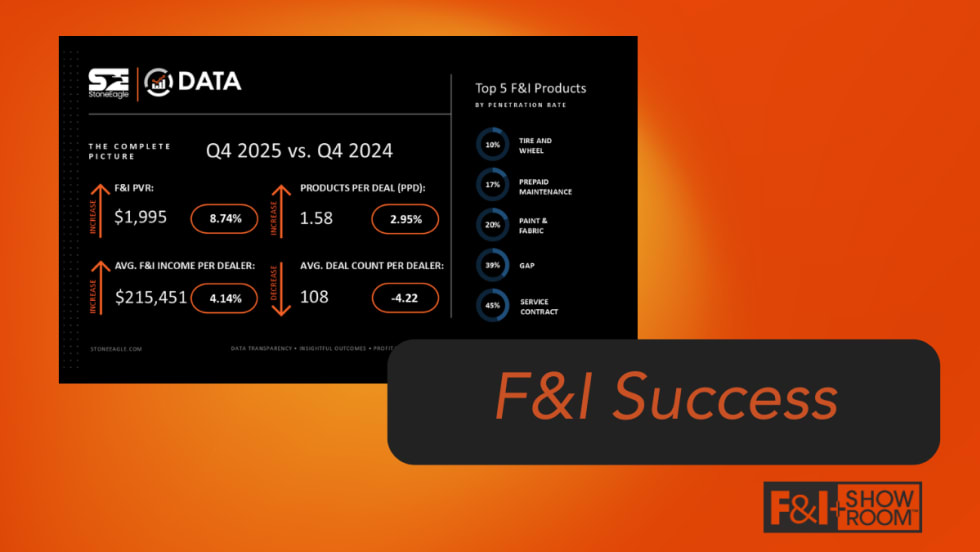
Closing out a topsy-turvy year still in the F&I saddle should give you a sense of accomplishment.
Yes, there have been plenty of big-spending customers in dealerships, including those taking advantage of federal electric-vehicle tax credits while they lasted, along with consumers benefiting from stock market gains. But there have been plenty more struggling to squeeze in a trade in an economy full of inflated prices, let alone purchase add-ons.
That’s where you’ve come in, finding ways to help financially strapped customers save money over the long run with the protections many could easily dismiss because of the understandable instinct to cut corners. That skill should hold you in good stead heading into 2026.
With U.S. trade tariffs still in flux and their ultimate effect on consumers not yet fully realized, next year is likely to present more challenges.
So far, some automakers have passed down tariff costs to the consumer, while others have found ways to avoid leaving them with at least part of the burden. Toyota, the world’s biggest automaker, for example, has absorbed tariff costs, which it estimates will cut its profit this year by $9.5 million. Porsche has hiked prices by different degrees depending on the model.
In a September report, J.P. Morgan Chase analysts said they expect automakers and consumers to share 2025 auto and parts tariff costs of an estimated $41 billion for a consumer impact of about 6% of the average retail price, a cost that would increase over the next two years.
“This will hit consumers hard, especially as many are already struggling to afford new vehicles,” the report said, perhaps stating the obvious after years of inflation since the pandemic.
It’s hard to say how economic conditions will shake out in what’s so far been a hard-to-predict roller coaster ride this year. The F&I office can meanwhile serve as a cushion of sorts for consumers weighed down by today’s costs, helping them transfer risk and spread out the price of protecting one of their most expensive assets.
So as you look to the new year, it may make sense to build in some practice or new training to sharpen your customer-engagement skills. Despite the inevitable holiday shopping rush on the lots, it’s a good opportunity to get ahead, for your dealership and the consumer.
LEARN MORE: Solving Affordability and Negative-Equity Challenges