MenuMENU
SearchSEARCH

State Franchise Laws Benefit Consumers, Economic Analysis Concludes

A new economic analysis shows that state franchise laws, which have come under attack by regulators like the Federal Trade Commission, stimulate competition that results in lower retail prices for consumers.

by Staff
July 12, 2016
2 min to read


WASHINGTON, D.C. — The question of whether state franchise laws protect dealerships at the expense of consumers was addressed in a new economic analysis released today by an independent and nonpartisan think tank. The conclusion: state franchise laws are not protectionist, and they produce lower prices for consumers.

Conducted by the Phoenix Center for Advanced Legal and Economic Public Policy Studies, the analysis sought to answer the question of whether these decades-old laws, which have come under attack in recent years by regulators such as the Federal Trade Commission, still benefit consumers. According to Phoenix Center Senior Fellow Professor T. Randolph Bear and Chief Economist Dr. George S. Ford, the answer remains “Yes.”

“First, the Phoenix Center’s economists demonstrate that state auto franchise laws do not limit competition,” the center stated in its release. “By most expert accounts, there are more than enough dealerships to ensure competition on pricing and servicing, especially for traditionally domestically branded cars. It is also readily acknowledged that new automobiles are sold at scant profit margins, which belies claims of market power.”

The authors said the laws also alter the way consumers buy cars and service their vehicles. “Instead of consumer engaging in one-off transactions with powerful manufacturers, dealerships are in a continual relationship with manufacturers and choose to bundle sales and service in a manner preferred by consumers — but not by manufacturers,” the center noted in its press release. “As a result of this intermediary function played by independent auto dealers, retail car prices are lower for consumers under state auto franchising laws.”

To read the Phoenix Center’s full analysis, click here.

More Compliance

ComplianceNovember 26, 2025

Turnover and Compliance

Why ongoing training is a necessity

Read More →
F&INovember 10, 2025

Singing a Gospel Song Backward

Crime and punishment in auto retail and how to avoid them

Read More →
ComplianceSeptember 26, 2025

The Best Thing a Dealer Can Do to Avoid Legal Problems

Citing the issue is a strategy borrowed from the legal field itself.

Read More →
Ad Loading...
ComplianceSeptember 15, 2025

Fines of the Times

Civil penalties for noncompliance with federal auto retail and finance rules and regulations can add up quickly. Use this checklist to cover your bases.

Read More →
ComplianceAugust 26, 2025

Goodwill and Car Dealers

A dealer goodwill tale is a cautionary tale worth paying attention to.

Read More →
ComplianceAugust 11, 2025

Your Synthetic ID Theft Policy

Frankenstein’s monster is coming for your dealership. Use this guide to recognize synthetic ID thieves and maintain Red Flags Rule compliance.

Read More →
Ad Loading...
ComplianceJune 30, 2025

The Regulatory Empire Is Striking Back

President Trump - entropist and corporate disruptor in consumer law

Read More →
IndustryJune 26, 2025

How to Clear a Red Flag

Refine and enforce your dealership’s FTC-mandated ID theft-prevention program to ensure no transaction goes awry.

Read More →
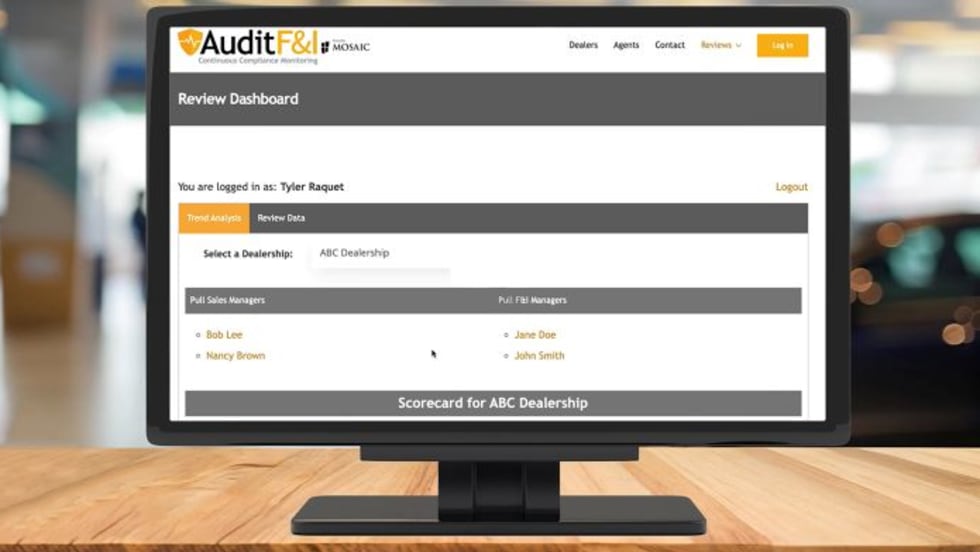
Computer screen showing the Audit F&I Review Dashboard, displaying dealership selection and manager scorecard options for ABC Dealership.
F&Iby Press ReleaseJune 18, 2025

Mosaic Adds Continuous Monitoring With AuditF&I

New AuditF&I platform is designed to give dealerships a smarter way to stay compliant.

Read More →
Ad Loading...
IndustryMay 28, 2025

Mount Rushmore and Tariffs

A return to autarky? Are tariffs good policy?

Read More →