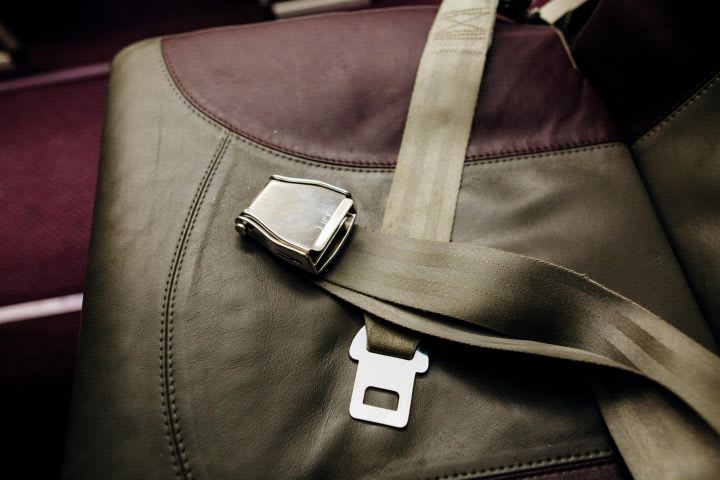
Seat belt fastening reminders might be as annoying as an alarm clock on a cold, dark morning, but statistics show they can make the road safer for those who respond.
The Insurance Institute for Highway Safety says automakers have made them louder and more persistent since the nonprofit group started rating seat belts two years ago, and newer models are therefore getting its good safety ratings.
Of the 2024 models IIHS has tested so far, 62% got IIHS’ good rating, compared to just 17% in the first year of testing. In fact, 18 models that formerly failed to pass muster in the seat belt reminder category are now rated good.
“Automakers can boost a vehicle’s performance in this test with just some small software changes,” IIHS President David Harkey said in a press release on the ratings. “These easy tweaks can have a big impact on safety.”
The group gave eight models a poor rating, which means the driver seat belt reminder lasts just a short time or isn’t deemed loud enough to get the driver’s attention. Seven got marginal ratings, meaning overall seat belt reminders aren’t loud or long-lasting enough. And three were rated acceptable, indicating reminders are adequate in the front seats but not the back seats.
The group says insistent seat belt reminders, compared to less obtrusive ones, are far more effective in changing part-time seat belt wearers’ habits. Unlike the small percentage of people who never buckle up, part-time bucklers sometimes just forget to or neglect doing so on short trips, IIHS says.
“We found that an audible reminder that lasts at least 90 seconds increased belt use by around 30%,” said IIHS Senior Research Scientist David Kidd. “That means we could save almost 1,600 lives a year if every vehicle on the road was equipped with a good-rated system.”
A little over a year ago, the National Highway Traffic Safety Administration proposed a new rule that would require automakers to include seat belt reminders for front passenger and back seats. But IIHS says the measure doesn’t include adequate alert frequency or volume requirements that it believes are needed to meaningfully change behavior.
Meanwhile, many automakers have exceeded the proposed requirements on their own, perhaps influenced by IIHS' ratings system.
The improved vehicles this year are:
Acura MDX
Ford Escape
Ford Expedition
Ford Maverick
Honda CR-V
Honda HR-V
Honda Odyssey
Honda Pilot
Hyundai Tucson
Mazda CX-5
Mercedes-Benz C-Class
Nissan Altima
Subaru Crosstrek
Toyota Corolla hatchback
Toyota Corolla sedan
Toyota RAV4
Toyota Tacoma
Volvo XC40
DIG DEEPER: Movement Sensor Offered in New Minivan