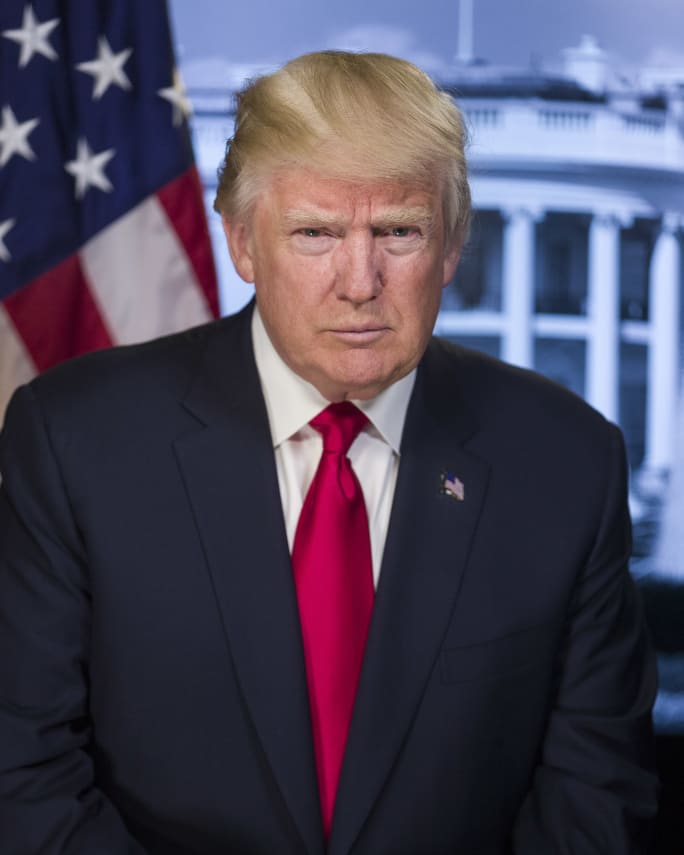
President Donald Trump took his first step toward making good on his promise to dismantle the Dodd-Frank Wall Street Reform and Consumer Protection Act, signing on Friday an executive order directing the secretary of the Treasury to review the 2010 financial oversight law.
WASHINGTON, D.C. — President Donald Trump took his first step toward making good on his promise to dismantle the Dodd-Frank Wall Street Reform and Consumer Protection Act, signing on Friday an executive order directing the secretary of the Treasury to review the 2010 financial oversight law.
The order directs the Treasury secretary to consult with members of regulatory agencies and the Dodd-Frank-created Financial Stability Oversight Council and report back to the president within 120 days (and periodically thereafter). The report, and all subsequent reports, will identify any laws and regulations that inhibit federal regulation of the U.S. financial system.
Ad Loading...
“Today we’re signing core principles for regulating the United States financial system,” Trump said after signing the order. “It doesn’t get much bigger than this, right?”
The core principles his order lays out include regulations that “empower Americans to make independent financial decisions”; prevent taxpayer-funded bailouts; foster economic growth; enable American companies to be competitive in domestic and foreign markets; advance American interests in international financial regulatory negotiations; and “restore public accountability within federal financial regulatory framework.”
“The Dodd-Frank Act is a disastrous policy that’s hindering our markets, reducing the availability of credit, and crippling our economy’s ability to grow and create jobs,” said White House Press Secretary Sean Spicer during a press briefing. “Perhaps worst of all, despite all of its overreaching, Dodd-Frank did not address the causes of the financial crisis, something we all know must be done.”
Enacted in response to the Great Recession, the Dodd-Frank Act created new regulations along with several new government enforcement agencies, including the Consumer Financial Protection Bureau (CFPB). While Trump’s order isn’t expected to have an immediate impact, it does set the stage for Trump to fulfill his campaign promise to repeal and replace the act. The likely replacement bill is the Financial CHOICE Act of 2016, which was introduced last year by Rep. Jeb Hensarling (R-Texas). It stands for “Creating Hope and Opportunity for Investors, Consumers and Entrepreneurs.”
“I’m very pleased that President Trump signed this executive action, which closely mirrors provisions that are found in the Financial CHOICE Act to end Wall Street bailouts, end ‘too big to fail,’ and end top-down regulations that make it harder for our economy to grow and for hardworking Americans to achieve financial independence,” said Hensarling. “Dodd-Frank failed to keep its promises, but President Trump is following through on his promise to the American people to dismantle Dodd-Frank. Republicans are eager to work with the president to end and replace the Dodd-Frank mistake …”
Ad Loading...
Repealing Dodd-Frank, however, doesn’t necessarily mean the CFPB will be eliminated, as it exists independent of the law that created it. However, regulatory insiders say passage of the Financial CHOICE Act could weaken the bureau. A federal appellate court also ruled the bureau’s single-director structure unconstitutional this past October, giving the president the power to remove Director Richard Cordray at will. The CFPB is appealing that decision.
Asked during Friday's press briefing if the administration planned to keep Cordray, Spicer said he didn’t have an announcement on the bureau. “That’s an area that we need to work with Congress on,” he said.
In this video, Reese Dailey explains how effective follow-up drives better results
across the dealership, including increased sales, higher F&I penetration, and
stronger customer retention.
It may be human nature to back off when a customer seems to say no to a product or service. But experts say F&I managers should operate as though the answer will be the opposite.
Deal volume ebbed and flowed throughout 2025, but product performance remained steady, according to automotive technology and data intelligence solutions provider StoneEagle.
A TransUnion study found that relationship-driven sales models proved to be important, as consumers who used an agent had a lower shopping intensity than those going it alone.
In this video, Reese Dailey of the Automotive Training Academy by Assurant reveals strategies to make cash deals profitable without relying on monthly payment bumps.