MenuMENU
SearchSEARCH

IRS: Businesses Can File Cash Transaction Reports Electronically

Businesses that receive cash payments of more than $10,000 must report these payments to the IRS – it's the law.

September 24, 2020
IRS: Businesses Can File Cash Transaction Reports Electronically

Businesses that receive cash payments of more than $10,000 must report these payments to the IRS – it's the law.

2 min to read


IRS – Businesses that receive cash payments of more than $10,000 must report these payments to the IRS – it's the law. Now businesses can batch file their cash reports; this is especially helpful for those required to file many forms.

Here are some key things to know about reporting these payments.

What's Considered Cash

Cash includes coins and currency of the United States or any foreign country. For certain transactions, it's also a cashier's check, bank draft, traveler's check or money order with a face amount of $10,000 or less.

Businesses must report cash of more than $10,000 that they receive:

  • In one lump sum

  • In two or more related payments within 24 hours

  • As part of a single transaction within 12 months

  • As part of two or more related transactions within 12 months

Reporting These Payments

Taxpayers report cash payments by filing Form 8300, Report of Cash Payments Over $10,000 Received in a Trade or Business.

Filing electronically is encouraged. It's free, secure and a more convenient and cost-effective way to meet the reporting deadline. Filers will receive an electronic acknowledgement of each form they file.

To e-file, a business has to have an account with the Financial Crimes Enforcement Network's BSA E-Filing System. To set up an account, businesses can call the BSA E-Filing Help Desk at 866-346-9478 or email them at bsaefilinghelp@fincen.gov. Those who prefer to paper file can send Form 8300 it to the IRS at the address listed on the form.

Those who prefer to paper file can send Form 8300 to the IRS at the address listed on the form.

When to File

Form 8300 must be filed within 15 days after the date the cash is received. If a business receives payments toward a single transaction or two or more related transactions, they should file when the total amount paid exceeds $10,000.


More Compliance

ComplianceNovember 26, 2025

Turnover and Compliance

Why ongoing training is a necessity

Read More →
F&INovember 10, 2025

Singing a Gospel Song Backward

Crime and punishment in auto retail and how to avoid them

Read More →
ComplianceSeptember 26, 2025

The Best Thing a Dealer Can Do to Avoid Legal Problems

Citing the issue is a strategy borrowed from the legal field itself.

Read More →
Ad Loading...
ComplianceSeptember 15, 2025

Fines of the Times

Civil penalties for noncompliance with federal auto retail and finance rules and regulations can add up quickly. Use this checklist to cover your bases.

Read More →
ComplianceAugust 26, 2025

Goodwill and Car Dealers

A dealer goodwill tale is a cautionary tale worth paying attention to.

Read More →
ComplianceAugust 11, 2025

Your Synthetic ID Theft Policy

Frankenstein’s monster is coming for your dealership. Use this guide to recognize synthetic ID thieves and maintain Red Flags Rule compliance.

Read More →
Ad Loading...
ComplianceJune 30, 2025

The Regulatory Empire Is Striking Back

President Trump - entropist and corporate disruptor in consumer law

Read More →
IndustryJune 26, 2025

How to Clear a Red Flag

Refine and enforce your dealership’s FTC-mandated ID theft-prevention program to ensure no transaction goes awry.

Read More →
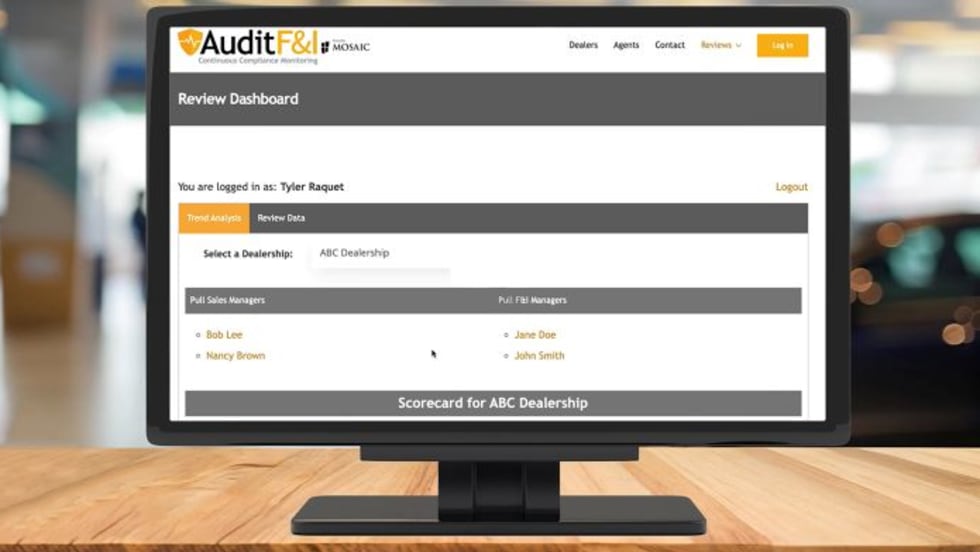
Computer screen showing the Audit F&I Review Dashboard, displaying dealership selection and manager scorecard options for ABC Dealership.
F&Iby Press ReleaseJune 18, 2025

Mosaic Adds Continuous Monitoring With AuditF&I

New AuditF&I platform is designed to give dealerships a smarter way to stay compliant.

Read More →
Ad Loading...
IndustryMay 28, 2025

Mount Rushmore and Tariffs

A return to autarky? Are tariffs good policy?

Read More →