Operations expert offers a two-step fix for solving cash-flow issues related to contracts in transit. It includes process and technology recommendations, as well as penalties for violations.
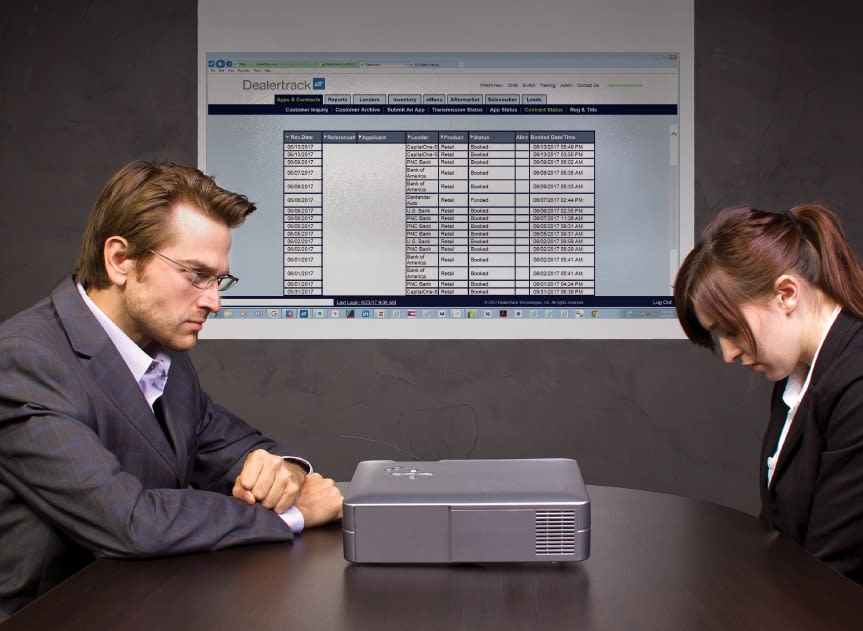
The dealer sits down to review reports for what’s shaping up to be a promising month, only to discover that the balance of contracts in transit is $800,000. It’s not the ideal way to start the morning. High CIT balances mean insufficient cash flow to pay off vehicles, stock used units, advertise, and more. So how can it be resolved?
The first step is to review the dealership’s current daily operations to see how efficiencies can be improved. Now here are some policies and procedures designed to help streamline getting a deal approved and funded, as well as penalties designed to ensure those policies and procedures are consistently followed. There’s even an optional step that can drastically reduce CIT.
Step 1: Implement Policies and Procedures
A good way to reduce CIT issues is to stage daily build-a-deal meetings. These half-hour gatherings should be required and held first thing in the morning. They should include upper management (general managers, general sales managers, F&I directors, etc.) and managers, if they are available.
If the meeting is held at 8 a.m., the dealer should have a recap meeting at 9 a.m.. This will place a priority on moving contracts in transit, as well as following up on unsold opportunities from the previous day.
All deal jackets from the last day of business should be brought to the build-a-deal meeting. These will fall under one of the below categories:
Customers who did not purchase
Customers who purchased but were not contracted
Customers who were contracted but not delivered
Customers who were contracted and delivered
If a deal jacket was not completed but submitted to the accounting department, it should be brought to the meeting. Your F&I development company can help conduct the first build-a-deal meeting, as it should be very familiar with the process and be able to provide direction for how a productive meeting should be run.
Optional Step: Consider Moving to Econtracting
Another way to reduce CIT issues is to move to 100% econtracting. Most banks and captive finance companies are set up for it, and they deliver funding within 24 hours. Other advantages include:
Reduced overnight shipping expenses, since there is no need for courier services
No recontracting for missed signatures or incorrect deal structure
More time for the F&I product presentation, resulting in higher F&I profit per vehicle retailed
A more user-friendly and secure process for customers
Now here’s an example of the possible cost savings when remitting with econtracting vs. mailing in paper contracts:
ABC Motors delivers 100 units a month and claims 85% finance penetration. That means the dealership will remit 85 contracts for the month.
Let’s assume ABC Motors sends a few contracts a month in the same package to multiple finance sources, so 50 courier service charges per month. Let’s also assume the dealership has a prenegotiated overnight shipping rate of $10 vs. the average rate of $15. That brings the total cost to $500 for 50 contracts at $10 per contract.
Now let’s assume the current pricing for econtracting is a flat fee of $300 per month for an unlimited number of contracts, bringing the total cost to remit those 50 contracts to $300. That equates to a $200 savings per month for ABC Motors using econtracting.
Now multiply the monthly costs of both scenarios by 13 locations. Yeah, mailing contracts can be a large and unnecessary expense. Keep in mind these calculations do not account for any resigns, which would result in two overnight shipping charges and an extended wait time for funding.
As previously noted, electronically contracted deals are funded within 24 hours. The average funding time for mailed-in remitted contracts is three to four business days. And while the dealership waits, it is still paying interest on that money until those deals are funded. To help put things in perspective, here is an example of a typical funding timeline:
Saturday: ABC Motors has a great day of business.
Tuesday: Deals from that busy Saturday are finally packaged in the office and mailed out by the end of the day — two business days after the contracts were signed.
Thursday: The bank finally receives those Saturday deals — four business days after the contracts were signed. By the time the bank sends funding, it could very well be another five to six business days of CIT for a total of nine to 10 business days after the contracts were originally signed.
Now that timeline assumes stipulations aren’t involved or a resign isn’t required. If they are, funding may not be received until 11 to 13 business days after the contract was originally signed. Time is money, and as you can see, econtracting can significantly help a dealership save on both.
Step 2: Implement Penalties for Violators of Policies and Procedures
Contacts in transit have always been a concern for dealers, no matter the size of their operation. So, aside from conducting daily build-a-deal meetings and adding econtracting, adjusting compensation so no one gets paid until the deal is funded may be necessary. It may seem a little harsh, but it will deliver a more desirable result.
Hey, unless there are consequences, there will be no change in behavior. Here’s a possible compensation plan to implement for dealerships that remit 75% to 100% of their deals using an econtracting platform:
Deal funded within five business days: 100% of commission
Deal funded between six to 10 business days: 75% of commission
Deal funded between 11 to 15 business days: 50% of commission
Deal funded after 16 business days: no commission
The degrees of punitive measures should only be put in place after the policies and procedures — as well as the build-a-deal meeting and econtracting — are implemented, and only if they are needed.
Your F&I development company is a great resource to help resolve high CIT balances. It can also assist with the build-a-deal meetings and negotiating an econtracting platform, as well as other customized in-dealership support for your dealership. Bottom line, implementing the above steps will help to dramatically reduce CIT balances, resulting in more cash flow for the dealership.
Demetrios T. Lahiri serves as national vice president of sales for American Financial & Automotive Services Inc. Contact him at demetrios.lahiri@bobit.com.