It took nearly three years for the auto finance industry’s newest regulator to make its presence felt, and it did so in a big way. On June 27, the Consumer Financial Protection Bureau (CFPB) ordered U.S. Bank and its nonbank partner company, Dealers’ Financial Services (DFS), to pay a total of $6.5 million in restitution for deceptive marketing and auto finance practices.
It was a shot heard ‘round the industry, but it surprised no one. Three years earlier, the CFPB had been established and charged with assuming responsibility for enforcing certain consumer financial protection laws. The agency’s directors hinted in the closing months of 2012 that auto finance would be a major target in 2013.
The CFPB’s assistant director, Richard Hackett, confirmed this at the National Automotive Finance (NAF) Association’s annual conference in June, 22 days before the bureau announced its enforcement action. The bureau, Hackett said, was “doing a lot of aiming … before firing those bullets.”
Caught in the Crosshairs
Legal insiders and compliance experts have predicted the CFPB’s targeting of the indirect financing channel since the bureau went live on July 21, 2011, as a result of the Dodd–Frank Wall Street Reform and Consumer Protection Act. But the bureau’s agenda remained somewhat of a mystery until Hackett appeared at the American Financial Service Association (AFSA)’s annual conference in February.
Hackett listed off a number of areas the bureau was targeting. He then made clear dealer participation was at the top of the bureau’s list.
Two weeks after Hackett addressed finance execs, reports began to swirl that at least four banks were issued letters warning them of possible violation of the Equal Credit Opportunity Act (ECOA). At issue were finance source policies that allow dealers to mark up interest on retail installment sales contracts. According to reports, the letters indicated the bureau believed such policies were creating ethnicity-based pricing disparities.
Ally Financial was the first finance source to confirm the CFPB’s actions. In a March 1 filing with the Securities and Exchange Commission (SEC), Ally officials stated the company had been advised by the CFPB that certain parts of its retail financing practices were under investigation and that it could face legal actions.
Three weeks later, the CFPB issued a five-page guidance that spelled out its review of dealer participation programs. It stated that finance sources wouldn’t be protected by the ECOA’s Reg. B, which lets creditors off the hook for another creditor’s violation. The guidance also stated that the bureau would hold finance sources liable under the legal doctrine known as “disparate impact,” which states that lenders can be sanctioned for actions that have a discriminatory effect — even if they didn’t intend to discriminate.
“Consumers should not have to pay more for a car loan simply based on their race,” CFPB Director Richard Cordray said the day the bureau issued its guidance. “Today’s bulletin clarifies our authority to pursue auto lenders whose policies harm consumers through unlawful discrimination.”
Finance institutions like Chase and Fifth Third Bank reacted quickly, issuing notices to dealers announcing dealer participation monitoring programs. Legal experts, however, questioned the bureau’s theory of liability to determine whether car buyers are being discriminated against.
Under the “disparate impact theory,” the CFPB is free to pursue violations of the ECOA based solely on statistics that suggest an otherwise neutral policy is, in fact, affecting minorities. Currently, the theory is under attack before the Supreme Court as it relates to the Fair Housing Act, but the issue is far from settled.
“The government is defending this theory very, very strongly,” says Jean Noonan, partner in the law firm of Hudson Cook LLP. “The bottom line message here is that there are very important things happening, but we probably won’t know for many months whether or not it’s going to make a difference. If it does make a difference, it could be a sea change in fair lending enforcement.”[PAGEBREAK]
A Lack of Transparency
Along with its linchpin legal theory, the CFPB’s lack of transparency in how it tests for discrimination has come under scrutiny. In two separate letters, 35 House Republicans and 13 Democrats from the U.S. Congress called for the bureau to divulge information related to its ongoing investigations, calling its lack of transparency “highly concerning.”
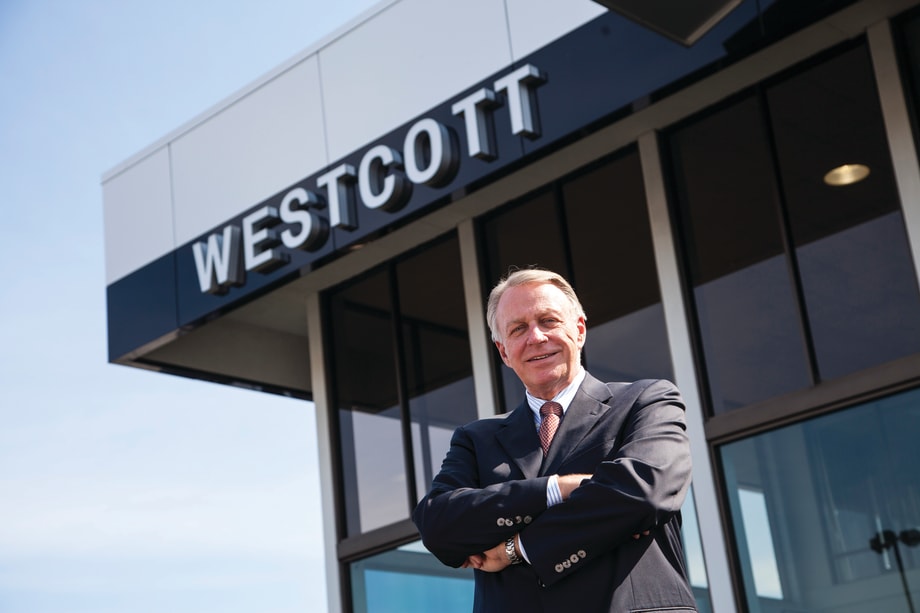
Industry associations, including the National Automobile Dealers Association (NADA), have also spoken out. “The bureau has been cordial and willing to listen to our concerns; however, it has not provided us with some very basic information that we have requested,” says David Wescott, the NADA’s 2013 chairman. “This is unacceptable, particularly given how important it is to be transparent and data driven in the regulatory process.”
It’s now clear that, whatever methodology the bureau is employing, it intends to act. And in the case of U.S. Bank and DFS, it’s clear the bureau isn’t singularly focused.
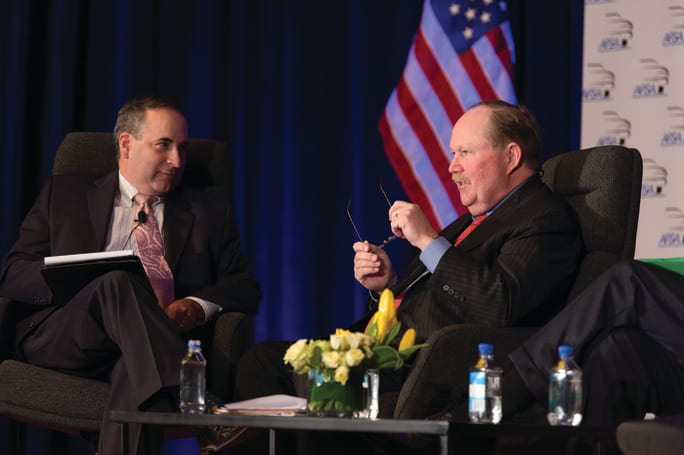
The only thing the CFPB’s Richard Hackett would say is that the bureau is using publicly available data.
The companies weren’t penalized for violations of the ECOA. Instead, they were charged with violating the Truth in Lending Act and the Dodd-Frank Act. The latter declares a prohibition on deceptive acts or practices that fail to properly disclose all fees charged to participants in their Military Installment Loan and Educational Services (MILES) program.
U.S. Bank and DFS were ordered to pay $3.2 million and $3.3 million, respectively, to affected consumers.
“Through the course of our oversight examinations, we learned that the MILES program was failing to properly disclose costs associated with both the military allotments system, which it required service members to use in order to participate in the program, and the expensive add-on products being sold to servicemembers,” Cordray said.
More to Come
Hackett recently confirmed more supervisory investigations are underway, but did not reveal the subjects of the investigations. “Not every investigation results in further regulatory activity,” Hackett stated at the NAF Association’s June conference.
Further regulatory action could include civil monetary penalties. This did not occur in the U.S. Bank/DFS case, “in part because of the manner in which U.S. Bank and DFS cooperated with the bureau to resolve these matters,” Cordray said during a media conference call to announce the bureau’s enforcement action.
In guidance issued June 25 — two days before actions against U.S. Bank and DFS were made public — the bureau urged financial institutions to practice responsible conduct through self-policing and self-reporting, as well as remediation and full cooperation with the bureau in order to “favorably affect the ultimate resolution of a bureau enforcement investigation.”
But answers about how the CFPB determines which investigations merit further action were not forthcoming at the NAF conference, where Hackett responded to pre-approved questions on fair lending. “We didn’t make this stuff up,” he told attendees. “I’m not going to share the methodology with you today. I can say we have chosen to use publicly available data because we don’t want to put you in the position of not being able to replicate what we do.”
Using information from the U.S. Census and the Social Security Administration, CFPB analysts can take a guess at the ethnicity of a consumer based on his or her surname and geographic location. But these “proxies,” the publicly available data to which Hackett refers, have known error rates.
“Sometimes the error rate swamps the disparity that we’re seeing,” Hudson Cook’s Noonan explains. More accurate information might be hard to come by, as it is illegal for lenders to collect demographic information in any type of lending beside mortgages.
Flat-Fee Threat
The CFPB does not have regulatory authority over franchised dealers and independents with car-repair capabilities and who do not hold their own finance contracts, thanks to a hard-won exemption campaigned for by the NADA in 2010. But some experts, like Dealertrack’s Associate General Counsel Randy Henrick, believe the CFPB’s focus on auto lending is how it intends to thwart this exemption.
“The [fair lending] guidance [issued in March] is an example of how the [CFPB] is trying to indirectly regulate dealers who they can’t regulate directly,” he says. [PAGEBREAK]
Communications from the CFPB indicate that lenders that wish to continue purchasing rate participation contracts from dealers should have comprehensive fair lending compliance programs. The agency encourages finance sources to examine disparate impact in their loan portfolios as well as on a dealer-by-dealer basis. This, Henrick says, is “a fairly onerous compliance requirement” for lenders. The bureau offers an “easy alternative”: paying dealers on a fixed-fee basis — something that dealers believe could potentially cut into profits.
“What the CFPB would like to do is get rid of dealer participation and replace it with fixed-fee pricing,” Henrick says. “That’s not going to happen.”
Noonan doesn’t think lenders will voluntarily move to flat fees, either. “No one wants to be the first auto finance company to get rid of discretionary pricing because of the concern about losing incredible loan volume,” she says.
And dealers don’t have to worry about finance sources making a joint decision to move to flat fees. “The anti-trust lawyers will come out and rip us out of the room, put handcuffs on us and throw us right in jail,” Noonan says. “So someone has to go first and others have to follow the leader.”
Consumer Impact
In 2011, the Federal Trade Commission hosted three roundtable events in three cities. The forums were used by the FTC to determine where further regulations were needed. At the San Antonio event, the NADA presented an analysis of a collection of new-vehicle loans that originated between 2008 and 2010. The analysis, presented during a session on fair lending, was designed to demonstrate the benefits of dealer participation.
Using data collected by the Federal Reserve Board and J.D. Power and Associates, NADA’s analysts showed that consumers who chose the indirect vs. direct channel saved, on average, $635.40 in 2008. In 2009, the average savings climbed to $779.40, then again to $1,162.20 in 2010. In total, dealers helped consumers save $21 billion on new-vehicle financing during that period, information the CFPB has yet to highlight in its own analyses.
“It is difficult to know what the bureau has considered since it has not been forthcoming with information to support its disparate impact initiative,” says the NADA’s Westcott. “It did participate in the FTC roundtable process, including a fair lending session that it co-moderated in San Antonio. So, it is unlikely that the roundtable weighed heavily on the bureau’s decision to launch its initiative.”
Wescott’s concern, which is shared by the AFAS and the NAF Association, is that the CFPB’s actions will harm consumers in the end. That was the concern congressional Republicans raised in a June 20 letter addressed to Cordray. “The controls strike us as onerous and unrealistic, and restricting consumer choice is highly problematic,” read the Republicans’ letter.
Thirteen Democrats delivered a similar message to Cordray in a letter delivered a month earlier. They also requested information into the CFPB’s investigation of auto finance. “We must also work to ensure that credit markets function competitively and efficiently so that our small businesses can grow,” the letter states.
Hackett offered this comment at the NAF conference: “Our concern as expressed in the bulletin is not with buy rates, it’s with the discretion permitted for dealers to then add on to this base rate. It’s the discretionary markups unrelated to risk that creates a fair lending risk.”
No Clear Answers
While U.S. Bank and DFS did not incur civil penalties for deceptive auto lending, there is reason to believe others won’t be as lucky.
Last year, the CFPB reached settlements with several credit card issuers. Among them was Capital One Bank’s credit card division, which agreed to refund approximately $140 million to two million customers and pay a $25 million penalty for the way it marketed add-on products such as payment protection.
But until the bureau reveals how it determines that dealer markups are discriminatory, it will be hard to tell the effect these actions will have on dealers.
At the NAF conference, Hackett repeatedly stated the bureau does not believe “discretionary pricing is per se illegal.” Noonan, however, had a follow-up: “This comes just as close as the agency can possibly come to saying, ‘But we think there’s a significant risk that it will be illegal as applied.’”
The CFPB’s ongoing supervisory investigations might be more of a fact-finding mission than anything. Hackett revealed that the bureau is attempting to collaborate with financial sources to determine the location of the “bright line” in auto lending.
“One thing we try not to be in the business of is telling the market what to do,” Hackett said. “We’d rather have the market, which is much smarter than we are, discern … what the right answer is. And what the right answer is may well be simply monitoring the situation.”
The one thing the industry knows for certain is that Hackett, who retired from the bureau last month, won’t be part of that process. His departure makes clear there are several chapters left in this story.
“It’s too early to know how this matter will ultimately be resolved, but it should not be assumed that the bureau’s pressure on certain finance sources will cause the entire indirect finance market to change the way it does business,” Westcott says. “This is an intensely competitive market with numerous players.”