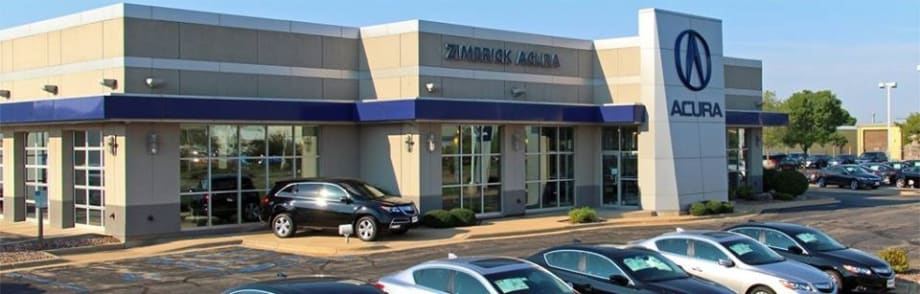
Dave Kreuser has stemmed the tide of turnovers at Zimbrick Acura by making employees, rather than customers, his top priority.
by Paul Herr
September 15, 2014
5 min to read
Conventional wisdom says customers should be our No. 1 priority. At first glance, this makes perfect sense, because it’s the customer who pays the bills. Dave Kreuser, the sales manager at Zimbrick Acura in Madison, Wis., has a different approach: He puts his employees first and his customers second. Kreuser’s contrarian stance merits deeper analysis.
“The ‘employee-first’ idea is based on simple logic I learned from my mentor, Thor Gilbertson, who is currently the vice president of operations for Bergstrom Automotive,” Kreuser explains. “Thor said, ‘If you take care of your employees’ needs, and your employees take care of the customers’ needs, you will have a prosperous and successful business.’ In other words, a positive employee experience drives a positive customer experience and a growing business.”
Ad Loading...
Kreuser adds that angry, bored and disrespected employees are not likely to deliver the world-class customer service you expect. He believes that putting employees first starts by genuinely caring about them. He lives by the motto of “care, concern and respect” and applies it to both his external and “internal” customers — he believes the word “employee” has negative connotations.
“It implies someone of lower rank and status who serves the boss and obeys the rules. It’s hard to motivate someone who feels like they are the low man on the totem pole,” Kreuser says. “‘Internal customers’ elevates them and reminds me to treat them with the same dignity and respect as my external customers.”
Strategic Thinking Kreuser and Gilbertson are not the only contrarians who put employees first. This is precisely what business management guru Gary Hamel recommends in his book, “The Future of Management.” Hamel doesn’t mince words. He compares modern corporations to ponderous dinosaurs that are desperately clinging to outmoded management ideas from the dawn of the Industrial Revolution. Hamel accuses corporations of coercing grudging compliance instead of inspiring passionate performance.
He then takes it one step further, predicting that the next 100 years of management science will be dedicated to undoing the damage from the past 100 years. People like Kreuser and Gilbertson should feel more confident knowing they are on the cutting edge of management science and that one of the planet’s top thinkers is squarely in their corner.
Kreuser says his employee-first approach translates into quantifiable data at his dealership. “If we spend $20,000 on a media campaign that attracts 200 customers, and we convert one-quarter of those leads into sales, then it costs us $400 in advertising for every car we sell. This takes a serious bite out of our margins and makes it hard to stay in business,” he notes. “The alternative to expensive media advertising is absolutely free.”
Ad Loading...
The free advertising to which Kreuser refers is, of course, the word-of-mouth advertising and repeat business the dealership earns when employees deliver exceptional customer service. As he explained, the goal is to turn customers into brand ambassadors who espouse the dealership via various interactions, including social media.
“When a customer’s child graduates from high school, we want to be the dealership that jumps to mind for that first car. Just as people have their preferred family dentists, doctors, accountants and attorneys, we strive for the same sort of family loyalty, and that’s only possible with dedicated and committed employees who go the extra mile for our customers,” Kreuser says. “This level of customer loyalty also translates into bigger margins, because people are less likely to travel to a megadealership in Chicago to save a few hundred bucks if they get world-class service delivered with a smile right here in Madison. Repeat customers and word-of-mouth advertising are just two of the many benefits of treating employees right.”
Reducing Turnover Naturally, there are numerous other ways loyal and motivated employees translate into financial success, lower turnover not least among them. Employee turnover is a huge and expensive problem in the automotive industry. According to a 2013 report commissioned by the National Automobile Dealers Association (NADA), annual turnover among salespeople at dealerships is an astonishing 62%.
Many owners and general managers believe that some people are born salespeople. They hire large numbers of young people with the hope of sifting the wheat from the chaff. They hire too many people with too few background checks, then provide little or no training, mentoring and coaching. They also offer little or no base salary and expect people to work long hours. This structure makes it nearly impossible for inexperienced salespeople to make a decent living or strike a healthy balance between work and life. In simple terms, auto sales can degrade into a thankless grind that chews up young people and spits them out.
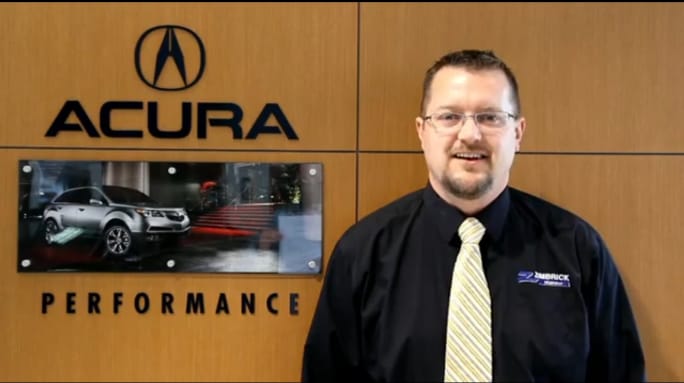
Dave Kreuser, the sales manager at Zimbrick Acura, uses an employee-first approach that translates into better customer service.
This revolving door for new hires creates enormous consequences. An earlier NADA report estimated that it costs $25,000 per position to replace a sales pro. This includes hiring and admin costs, training costs and the loss of repeat business. Customer satisfaction also takes a hit because the sales floor is flooded with inexperienced and anxious salespeople who are desperate to make a sale. Dealerships with high turnover also end up with plenty of unhappy “orphan owners” who don’t have someone to answer their questions or solve their problems.
Ad Loading...
Kreuser is fully convinced his store’s employee-first approach helps to resolve this challenge, noting that the average Zimbrick sales consultant has 15 years of seniority. “We treat people respectfully, care about them as people, rigorously coach and mentor them, staff appropriately, provide a good base salary with a competitive bonus plan and reasonable hours. This translates to improved customer service and an improved customer lifetime value,” he says, referring to the average value of a sale multiplied by the number of repeat transactions per year, multiplied by the average retention time in years for a typical customer.
One would think that more dealerships would be adopting the employee-first approach. Unfortunately, that is not the case.
“There is tremendous pressure in the auto industry for short-term results. Automakers are large, publicly held corporations with Wall Street analysts and investors pushing for short-term results. They also have huge fixed costs that need to get paid. These pressures get passed down to the dealerships,” Kreuser says. “They are under intense pressure to hit their numbers and can earn sizable financial rewards from the manufacturers when they do. The knee-jerk reaction under these conditions is to hire more salespeople, even if it harms employee satisfaction and customer retention in the long term.
“I fully believe that if we commit to our employees growth and development, and they commit to the customer and their employer, we will all end up light years ahead.”
Paul Herr is a partner at motormindz, a consortium of thought leaders from multiple automotive industry segments. Email him at paul.herr@bobit.com.
In this video, Reese Dailey explains how effective follow-up drives better results
across the dealership, including increased sales, higher F&I penetration, and
stronger customer retention.
Deal volume ebbed and flowed throughout 2025, but product performance remained steady, according to automotive technology and data intelligence solutions provider StoneEagle.
A TransUnion study found that relationship-driven sales models proved to be important, as consumers who used an agent had a lower shopping intensity than those going it alone.
In this video, Reese Dailey of the Automotive Training Academy by Assurant reveals strategies to make cash deals profitable without relying on monthly payment bumps.
Suite of new APIs, product enhancements and integrations is designed to help maximize contracting and funding efficiency for lenders and their dealer partners.