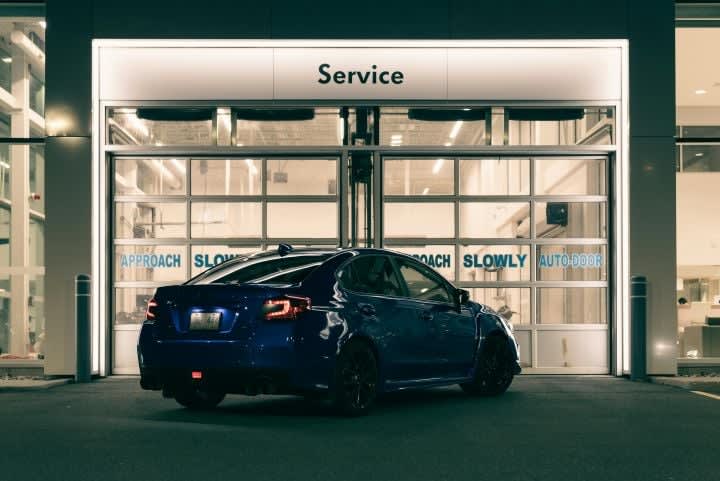
It can be challenging to get cars in the service drive for repairs, but the benefits can far outweigh the challenges.
Several dozen people’s deaths have been connected to exploding Takata air bags, but despite nearly 25 years of exhaustive efforts by safety regulators, automakers and others in the automotive industry, some cars’ potentially lethal air bag inflators still haven’t been replaced.
The infamous series of recalls, which affected tens of millions of various brands’ vehicles internationally, stands as a stark illustration of the ongoing challenge automakers and their franchised dealers face in coaxing consumers to bring in their recalled cars for repair. Many recalls, like the Takata ones, involve potentially life-or-death flaws that increase crash risk, yet U.S. cars with undone recall repairs number in the tens of millions.
California auto dealer Jessie Dosanjh is intimately familiar with the difficulties in convincing some customers to visit a dealership’s service drive, despite the fact that recall repairs are covered by manufacturers’ warranties.
Opportunities and Challenges
“We see recalls as absolutely an opportunity,” said the president of California Automotive Retailing Group.
But Dosanjh acknowledged that it can be a delicate balance to secure the necessary parts while reassuring customers until the parts arrive that they’re not in immediate danger but should follow through once the store has everything in place for the repair.
“A lot of times when the parts come in, we reach out to the consumer, and the customer just doesn’t care anymore,” said Dosanjh, whose Bay Area auto group operates 20 dealerships across 11 brands.
The group is far from alone in struggling to get recall repairs completed in its customer range. According to statistics compiled by Carfax, nearly 55 million vehicles traverse U.S. roads with undone recall repairs, or approximately 20%. Though that’s down from 58 million last year, many of the units still represent potential crashes waiting to happen.
The vehicle data provider teamed with the Alliance for Automotive Innovation trade association in 2018 to create the Vehicle Recall Search Service in an effort to increase recall repairs.
Carfax and the trade group, which represents many of the brands making and selling cars in the U.S., work with participating auto inspectors and state motor vehicle and law enforcement agencies to identify vehicles with undone repairs. So far, eight states’ DMVs have signed on, and millions of repairs have been made as a result, according to the partnership.
Roadblocks to Repair
But there are always the resistant. Despite the fact that recall repairs come free for consumers, they do take time and effort on their parts, especially if an issue can’t be remedied through a remote over-the-air update that doesn’t require a dealership visit. The trouble is part of the reason recall repair completion rates have been relatively constant over the years, according to the federal transportation department’s National Highway Traffic Safety Administration.
Inconvenience topped the reasons owners of cars at least 5 years old failed to respond to recall notices, according to a 2023 survey conducted by Stout. The Chicago-based financial advisory firm researches automotive recalls and works with industry players on recalls strategy, including five years spent helping automakers increase consumers’ Takata recall repair follow-through.
“Completion percentages for older vehicle recalls (in the Takata series), you’d only expect 30 to 40% (participation). We helped get those up to 80%, and nearly 100% for the most at-risk vehicles,” said Stout’s auto recalls practice leader Ray Roth.
Vehicles outside the manufacturer warranty are the most challenging when it comes to recall repair completion, he said. Their owners are less likely to take their cars to dealers for regular maintenance, resulting in fewer recalls being pegged for repair. Plus, their ownership is more likely to have changed at least once, making current owners unlikely to receive OEM recall notices unless automakers take extra contact measures.
Possible Paths Forward
Stout’s work on the air bag recalls took an unusual amount of legwork that’s unlikely to be copied in at least most other recall events. It went door-to-door to persuade units’ owners to pursue recall repairs and learn why they hadn’t done so already. The firm also encouraged automakers to phone and email owners, whereas they’re currently obligated only to mail letters by post.
“Some OEMs took some lessons learned to some other recalls, but I wouldn’t say it’s universally applied,” Roth said.
NHTSA first considered in 2016 adding electronic notifications to automakers’ required recall notifications of consumers. Such a change could conceivably capture some owners who may have changed addresses since they bought their cars, but almost a decade later, the proposed change is still in process. The federal agency issued a revised notice of the potential rule last February.
Since the wheels of government move slowly, auto dealers can still benefit by leveraging other ways to get customers in their stores for recall repairs, thereby building trust and boosting business. Today, fixed operations are key to shoring up margins as many consumers struggle to afford cars, and resolving safety issues for them is a natural way to build such beneficial relationships.
“Recall repairs are high-value, low-friction service lane visits,” said Ryan Maher, a third-generation auto dealer who founded recall-management provider BizzyCar. “For dealers investing in mobile service or streamlined scheduling, this is a chance to turn a compliance obligation into a retention engine.”
Auto dealerships have plenty of room for growth on recall repair business that’s right under their rooftops. About 11% of vehicles on the road leave the service drive with undone recall repairs, said Wayne Mitchell, who oversees automotive solutions development for risk-management service provider Sedgwick.
He advises auto dealers to build recall management into their service drive processes to capture the untapped business. That way, they can encourage owners of every car with an open recall to follow through on repair.
“You want to make it as simple to schedule an appointment as possible,” he said.
OTA Updates Factor
There may be more obstacles to recall repair than ever before. With increasing over-the-air software updates as cars get more and more like mobile computers, it’s possible consumers could become less in tune with the need.
Mac McNeer, a communications expert with public relations and marketing firm Weber Shandwick, said he wonders if the ease of over-the-air updates could undermine the seriousness of recalls in consumers’ minds. Even most of the software-based remedies still require a visit to the service drive, according to BizzyCar.
“We’re seeing more recalls. Even with easy remedies. Is the owner getting bombarded so much – hearing too much about it that it all becomes just background?” McNeer said, considering the combined volume of recall software fixes and updates unrelated to recalls.
Recall issues remedied by over-the-air updates have skyrocketed from nearly 338,000 affected vehicles in 2020 to about 6.8 million last year, according to NHTSA.
“OTA updates offer convenience, but they also eliminate critical dealership touchpoints,” Maher of BizzyCar said. “Many safety fixes still depend on trained technicians and certified parts. Dealerships remain the front line of recall completion.”
Some automakers seem to take a more proactive stance on recalls than others. Ford recalled its autos at a brisk pace last year, passing competitors and announcing its efforts to increase vehicle safety.
“We will not compromise our responsibility to all our customers, not just those buying new vehicles,” said Chief Operating Officer Kumar Galhotra.
On the other end of the scale, a Tesla post on X about a 2024 Cybertruck recall put a light note on what would normally be a serious communication.
“Oh my! Imagine having to download & install a free over-the-air software update, which can be done from your phone & takes ~30 mins in most cases
“How will our owners ever recover from this ordeal,” the post read.
McNeer of Weber Shandwick said he thinks Tesla was “playing into that numbness” many consumers may feel from today’s barrage of all types of notices.
Going the Extra Mile
For Dosanjh, the California auto dealer, a little more effort can make a difference in convincing customers to complete recall repairs. If one of his stores hasn’t seen a customer in a while, it will offer a free inspection and recommend any needed nonwarranty work. If a recall involves a major repair, it might offer free maintenance as an incentive, such as an oil change.
“Hopefully they do come back and you build trust through the process. Especially if they bought a vehicle used from another dealer and they’ve never been to us before,” he said.
Dealers are in an ideal position to encourage recall repairs, experts say.
“They’re the last mile between the auto supply chain to that owner and typically have a direct relationship with the person who buys or leases the vehicle,” McNeer said.
“I’ve personally been notified about recalls from my local dealer before hearing from the OEM. … I think you get points for transparency and demonstrating an appreciation for your customer’s safety.”
In fact, some consumers prefer to get outreach from their local dealer on recalls as opposed to the manufacturer. That was the case for many with recalled Takata air bags, according to Roth at Stout.
“It’s that local market presence. There definitely was an advantage of having direct communication from a dealer,” he said. “You see its commercials, you drive by it. There’s a recognition of, ‘I know who these people are.’”
DIG DEEPER: The Key to Future Profitability Is Service Retention