When I started with gvo3 in 2007, we were a small business providing compliance solutions to auto dealers. Our client base consisted of several midsize to large dealer groups that trusted us with their compliance needs. Like the industry, we have evolved over the years, both in size and in our auditing process. As the industry changed and became more scrutinized by the Feds, we continued to evolve our processes to meet those changes.
Thinking back to my earlier days, I remember auditing Sharpie four-squares. Now dealerships are using e-desking applications (thank you, technology). I recall nonexistent paper trails. Now I see paper trails consisting of desking worksheets, a menu/accept declination, buyer’s (lease) order, retail installment sales contract (lease agreement) and product enrollment forms.
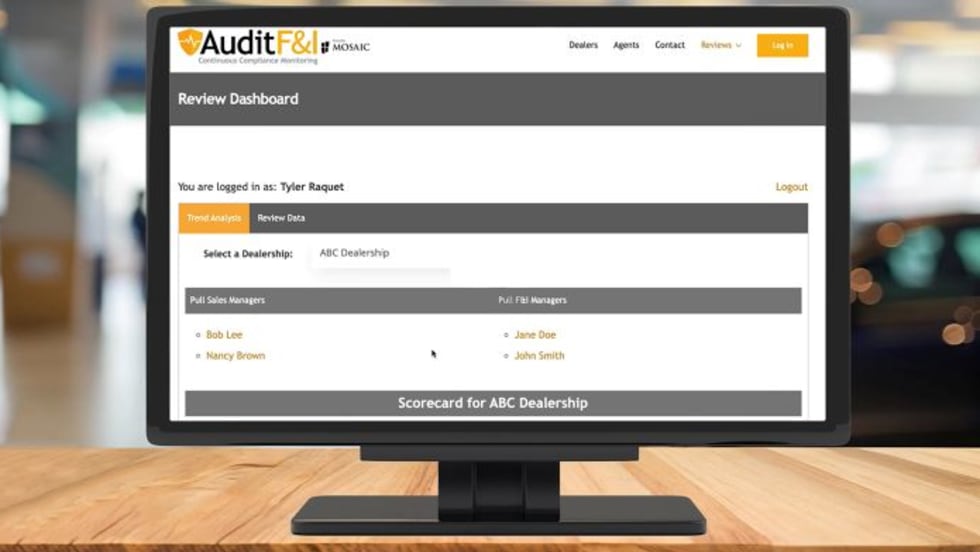
Over the years, as the industry has become more electronically driven, we have transitioned from paper deal jacket reviews to full electronic deal jacket reviews, which include utilizing all supporting electronic applications. Our reporting efforts have remained unchanged, and we continue to concentrate on elevated prohibited practices in every deal jacket. All compliant dealerships should be familiar with the following prohibited practices and take immediate action if they see them take place in their dealerships.
Inconsistent Signatures
Forgery is a crime and is inexcusable. Violators should be immediately terminated.
Signature on File
Obtain customer signatures on all applicable documents. “Signature on file” or any other such designations are not permitted.
Blank Signed Documents
No blank documents are to be signed by the customer and then completed later.
Inconsistent Payment Quotes
Inconsistent payment quotes can take place in both the sales and F&I processes and occurs when a payment quoted to the customer is more than the actual payment required to purchase the vehicle for the price agreed upon at that point in the negotiation.
Front-End Improvement
Front-end improvement is the practice of increasing an already agreed-upon vehicle sale price.
Straw Purchase
This is when the person who is purchasing and driving the vehicle is not a party on the deal. The financial institution must be informed prior to making a decision to buy the deal.
Inconsistent Bookout Practices
This is the practice of showing nonexistent options on a used car to increase the vehicle value on the bookout worksheet sent to the finance source. This value is used in the finance source’s underwriting criteria to compute the deal’s loan-to-value ratio.
Red-Flag Rule Issues
A red-flag search needs to be completed on all customers, and any discrepancies or alerts need to be addressed and documented by the dealer.
Credit Application Inconsistencies
Such inconsistencies are when the dealer modifies or misrepresents the information provided by the customer on a credit application.
Cash Back to Customer
This is usually considered to be a violation of the dealer-lender agreement, potentially bank fraud, and possibly tax evasion.
OFAC Issues
An Office of Foreign Assets Control search needs to be completed on all parties, including third parties, and any hits need to be addressed and documented.
Falsifying Information
Providing false or misleading information to finance sources to obtain credit approval is a violation of the agreement executed between the dealer and the finance source.
Shotgunning Multiple Vehicle Purchases
Multiple auto purchases occur when one person signs or co-signs for multiple auto loans within a short amount of time without the finance source’s knowledge. If a dealership employee has knowledge that multiple automobiles are being purchased, each finance source must be notified of the other contemporaneous sales.
The above-described prohibited practices are elevated concerns for a reason. Some violate dealer-lender agreements, some are considered bank fraud, and some are deceptive practices. They are all concerns that put the dealer at risk for penalties, fines and possible jail time.