An Ohio-based agent details a process designed to increase your dealership’s per-vehicle average by $200, and keep your lot stocked with cleaner trades.
by Chris Meacham
March 3, 2016
6 min to read
Whether it’s due to OEMs, the Consumer Financial Protection Bureau (CFPB)’s attack on finance reserve or the vagaries of the Information Age, squeezing out every last dollar per vehicle is a must in today’s margin-compressed environment. But let’s face it: The retail dealer franchise model has changed tremendously over the last few years, and that change is likely to continue. So how can a dealership create additional revenue? Well, there’s some low-hanging fruit many of you may be overlooking.
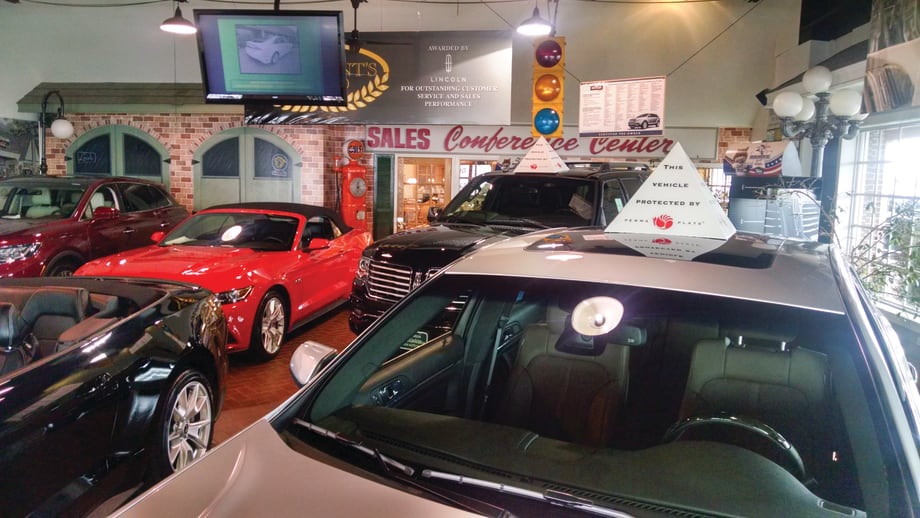
I’m talking about appearance protection, or what we used to call “Mop & Glow” or “The Goo.” See, a few years back I was visiting one of my Ford franchise clients. At the time, a few new vehicles were just coming off the delivery truck. What struck me was the amount of plastic coverings wrapping the cars. It was everywhere — on the interior carpet, dash, and steering wheel. Heck, even the wheels had plastic caps on them. The sight got me thinking about how much all that wrapping costs the OEM.
Ad Loading...
My conclusion was this: If the OEMs believe they need to spend a not-so-small amount to protect the first few weeks of a vehicle’s life, then it’s reasonable to assume that a few hundred dollars to give warranted protection against environmental fallout, acid rain, tree sap, bird droppings, interior staining, rips, tears, burns, and other mishaps for multiple years makes equal or better sense to a consumer. Let me explain.
Improves Trade Appraisals
Let’s start with the trade-in appraisal process. Does appearance play a role in the valuation? You bet it does. Most good vehicle appraisers realize the value of a visibly “clean” vehicle. In fact, the overall appearance has just as much to do with this subjective value as the mechanical condition of the vehicle and the number of miles on the odometer.
And it really doesn’t matter which data source you use to arrive at a value — Black Book, NADA, vAuto, auction reports, etc. — a “clean” vehicle will command a much higher value in the market. In fact, the disparity between clean and extra clean can be several hundred dollars, if not thousands. That’s great news for the customer and especially for us, because that means we’ll be able to retain that customer when he or she is ready to trade. We also know that these cleaner vehicles are tough to find at the block, and that dealers often pay too much to get something similar.
So how do we consistently take these types of vehicles in on trade? Does an appearance chemical program help keep the exterior of these vehicles in better shape? The good ones do. And how do you make sure all vehicles have this protection? You preload it.
Ad Loading...
The Preload
Appearance preloads have been adopted by most publicly held automotive retailers as a way to get all the benefits previously mentioned, as well as an additional $200 in profit per vehicle retailed. And that goes for both new and used. Recently, more and more organizations are employing the concept and are realizing the profit gains preloading delivers. And as we all know, the concept of frontloads and preloads has been around forever.
Now, there are some negative stigmas surrounding frontloads, including the hard cost they add to the vehicle. If the perceived value of the frontload doesn’t increase by greater than the hard cost of the items added (such as mud guards or a bedliner), then gross suffers. Preloads are different. There is no hard cost added to the vehicle, making it very easy to present the product to consumers without fear of loss if they say “No.” And it’s that take-it-or-leave-it approach that drives extremely high penetrations when the product is priced sensibly and has a high perceived value. Let’s examine the pre-load process:
The Application: The appearance vendor gives the dealer enough product to apply to the interiors and exteriors of every vehicle that hits the lot. Applying the product typically becomes added to the pre-delivery and used-car inspection processes. The only cost the dealer needs to account for is the labor required to apply it. For a new vehicle, the hard cost is 45 minutes of labor (not to be applied by a flat-rate employee, obviously).
However, most of the time that labor cost is eliminated in the get-ready department, because the vehicle takes much less time to clean for delivery when the product is already applied. So in essence, you’re shifting time away from the get-ready process to the pre-delivery inspection.
Ad Loading...
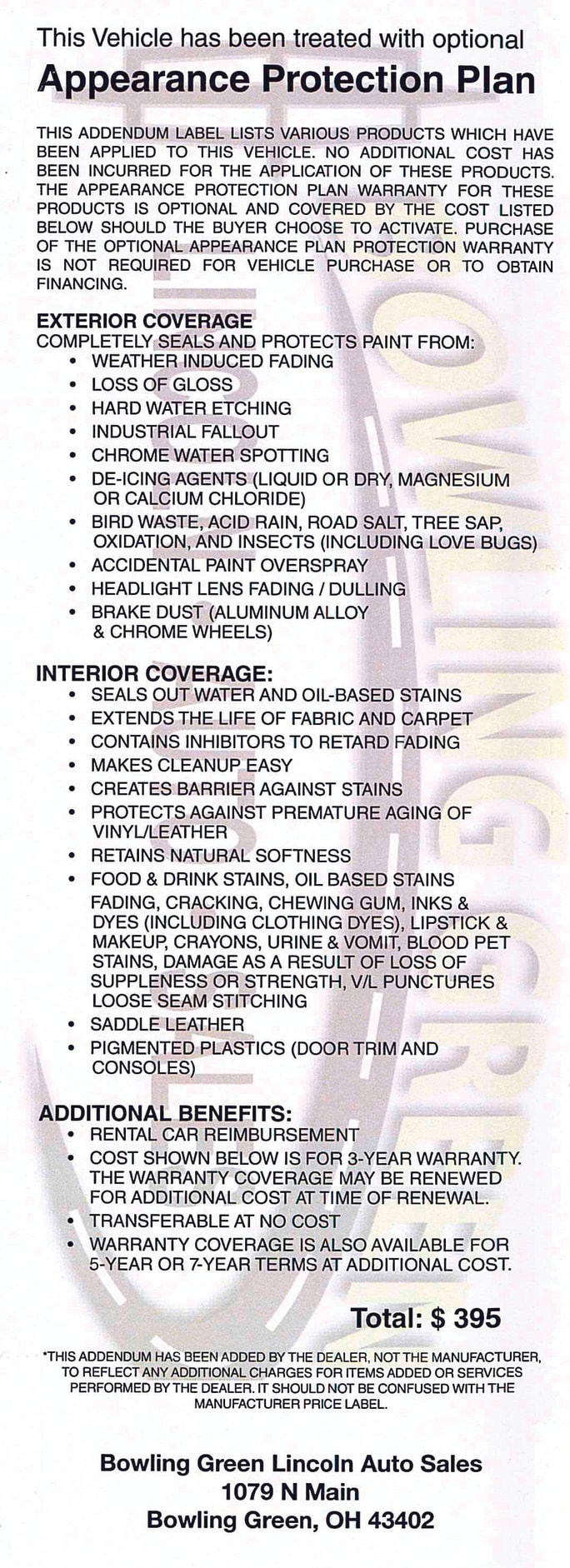
Disclosing the Preload: Next, place an addendum on each vehicle on which the product was applied. It should disclose the benefits of the optional appearance protection plan. The plan term can vary, depending on the dealer’s preference. Typically, the term is set at three years at a price of $395. Highline dealers may be able to sell it for $495, but the key to making this work is a sensible, no-brainer price point. The dealer then remits the product warranty contracts for customers who accept the protection.
Program Best Practices
While the success of this program depends on the culture of the store and the strength of the management team, I have seen acceptance rates as high as 70% when the appearance product is preloaded. Let’s review a few best practices:
Introducing the Option: The ideal time to inform the customer of the preloaded appearance option is when the sales consultant delivers his or her “why buy here” pitch: “As an organization, we have decided to protect our $10 million worth of inventory with an appearance protection plan that will protect our vehicles from …” The key here is how engaging the salesperson is when explaining the benefits to the dealership and the customer.
Disclosing the Price: Customers should then be shown the actual addendum disclosing the coverage and the optional price of $395. The key here is to tell customers they can decide on whether to purchase the protection after they select a vehicle that meets their wants and needs. The consultant then proceeds with the sales process.
Ad Loading...
Itemize the Preload: When a deal is finally proposed to the customer, the $395 cost for the product should be itemized and added into the figures. If the customer objects to the protection or wants to negotiate the price, the salesperson kicks the protection out of the deal.
At the end of the day, between 45% and 70% of customers will say “Yes.” Why? Well, because customers are engaged in the concept early, often, and throughout the sales process. Transparency is also extremely high since the customer is informed about the protection before vehicle selection. But the main reason acceptance rates are high is because the benefits and subsequent value — along with the no-brainer pricing — makes it very easy for the customer to say “Yes.”
Here’s the best part: The transparency of the process typically puts customers in a favorable mood once they reach the F&I office. In fact, customers who choose the appearance protection plan are more likely to select other sensibly priced F&I products tailored to their needs, especially similar products like paintless dent removal, tire-and-wheel protection or windshield repair. So product-mirroring is essential when employing the preload concept.
There are other benefits as well, such as increased service revenue and retention. And let’s face it, your inventory is going to look a lot better. So if you want to add a couple hundred dollars to your dealership’s per-vehicle average without reinventing the wheel, you may want to give appearance preload a try. It’s the ultimate win-win.
Chris Meacham is the founder of Automotive Integration, a general agency based out of Westerville, Ohio. He can be reached at chris.meacham@bobit.com.
In this video, Reese Dailey explains how effective follow-up drives better results
across the dealership, including increased sales, higher F&I penetration, and
stronger customer retention.
It may be human nature to back off when a customer seems to say no to a product or service. But experts say F&I managers should operate as though the answer will be the opposite.
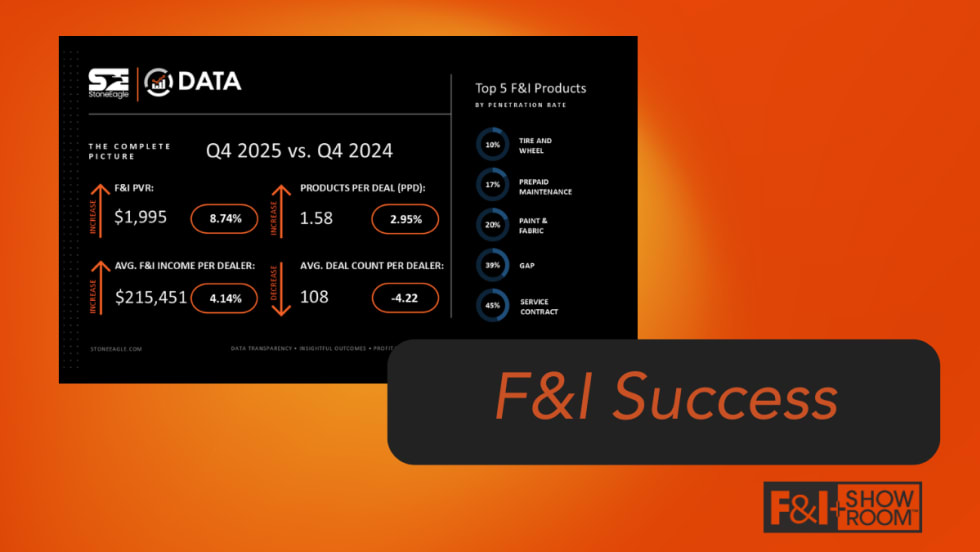
Deal volume ebbed and flowed throughout 2025, but product performance remained steady, according to automotive technology and data intelligence solutions provider StoneEagle.
A TransUnion study found that relationship-driven sales models proved to be important, as consumers who used an agent had a lower shopping intensity than those going it alone.
In this video, Reese Dailey of the Automotive Training Academy by Assurant reveals strategies to make cash deals profitable without relying on monthly payment bumps.