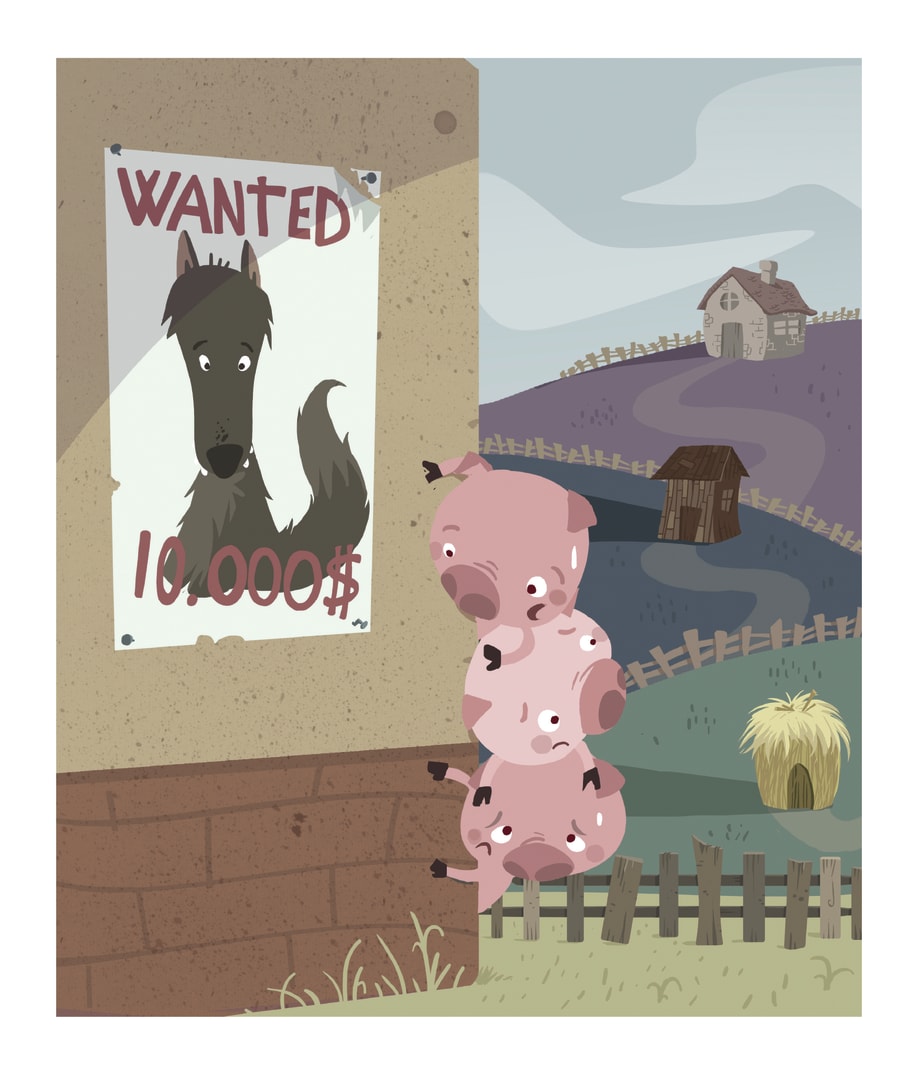
In “The Three Little Pigs,” we learn that building a house of straw is no way to keep out a big bad wolf. Well, in the context of an automobile finance transaction, it’s not the wolf you have to worry about when setting up a “straw purchase” for a customer; it’s a visit from a federal prosecutor.
Straw purchases are typically arranged for individuals who fail to qualify for a loan. They are left off the transaction entirely and replaced by someone who does qualify. And the identity of the actual purchaser is kept hidden from the lender. No matter how willing the “straw man” is to stand up for his or her credit-challenged friend or relative, this practice is a federal crime. So for the good of yourself and your dealership, you should make your most recent straw purchase your last.
Federal law defines bank fraud as the knowing execution of — or attempt to execute — a scheme or artifice to defraud a financial institution or to obtain any of the moneys, funds, credits, assets or securities owned by a financial institution by means of false or fraudulent pretenses, representations or promises. Any violation of this standard constitutes a crime punishable by a fine of up to $1 million and up to 30 years in prison.
If that’s not enough to dissuade you, I should add that, when such a scheme to defraud is transmitted in interstate commerce over wire — such as submitting a straw purchase deal to a finance source in another state — you can add wire fraud to the list of charges. The statute is sufficiently broad that it also covers practices such as powerbooking and fluffing income, but that discussion can be saved for another day.
Between time constraints and the need to get deals delivered and feed the bottom line, F&I professionals are under constant pressure. When the deal reaches our office and the credit is not what was hoped for, we are often told to just get it done. When faced with a car buyer who has significant credit challenges and a parent, relative or friend who is willing to go on the paper to seal the deal, we are faced with a significant dilemma. And it’s not just our production that’s on the line. The salesperson and the sales manager have a stake in the deal as well. That puts you at the center of a circle of willing participants in a scheme to defraud the lender. You might even get the sense your job is at risk if you resist.
When faced with this dilemma, my suggestion is to do the right thing: Put the credit-challenged individual’s name on the deal and let the chips fall where they may. You will be surprised at how often the deal gets done. Plus, you give the customer an opportunity to reestablish himself in the credit world. And oftentimes, customers will understand that the rate, while not what they were hoping for, is still better than they would have qualified for on their own, and the payment adjustment is accepted easier than expected. In addition, when those credit-challenged customers want to trade in their vehicle, it’s actually their trade and they may have sufficient credit to do it.
Adopting this approach will, admittedly, not get every deal done, but not getting such a deal bought will be rarer than you think.
See, there are some individuals who just don’t have a chance of getting approved for vehicle financing, even with the help of a cosigner and despite your best efforts to convince your lenders. When you are asked —and you will be — why you won’t just leave them off the deal, my suggestion is not to respond by saying that you can’t structure a straw purchase. Simply tell the salesperson and his or her manager that you refuse to commit bank fraud. You won’t always make your co-workers happy, but at least you can go home to your house made of bricks and not have to worry about who might be knocking on your door.
Eric Judson is a finance manager at Ray Laks Honda in Buffalo, N.Y., and a graduate of the State University of New York at Buffalo Law School. He was admitted to the New York State Bar on June 22. Email him at eric.judson@bobit.com.