AAA has given F&I managers a $3 billion reason every customer needs to drive off the lot with road hazard protection. Two F&I pros lay out a process for doing just that.
by Dwayne Wiggins & Stuart Brightman
August 8, 2016There’s no better source of product-moving information than AAA’s annual “Your Driving Costs” report. In 2016, the study showed that the annual cost to own and operate a vehicle in the United States fell to a six-year low thanks to a nearly 25% drop in fuel prices. But a deeper dive into the report shows the hundreds of dollars car owners can expect to save in fuel masks increases in every other cost associated with driving, including depreciation, maintenance, and tires.
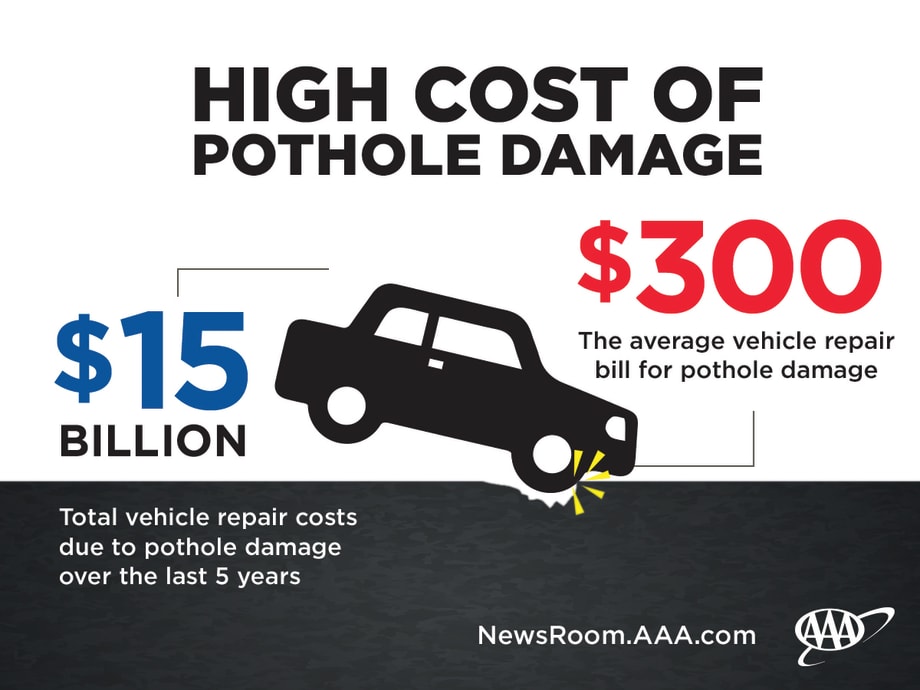
Let’s focus on the latter. See, while the study showed that the cost of tires increased by a slight 2.04% to $150 a year, a separate report the motor club association released this past February concluded that potholes on U.S. roadways have become a $3 billion annual problem for vehicle owners. And the average bill for a pothole-related incident was $300.
As business managers, we are always looking for opportunities to protect our customers while increasing our profits and penetrations. Ancillary products definitely fit the bill, especially since they’re also designed to keep customers connected to the service department. And we don’t need studies from the AAA to tell us that road hazard protection, or tire-and-wheel protection, is a must-have on the F&I menu.
Heck, every vehicle has four tires that are constantly touching the road, making them the most vulnerable or prone to damage. And vehicles can’t function properly if one or all tires are damaged, right? Painting a picture of the need for the protection is also easier, since there isn’t a car owner out there who hasn’t experienced the pain of having to dole out a large sum to replace one or more tires unexpectedly. And hey, according to the AAA, two-thirds of Americans are concerned about potholes — particularly households with annual incomes of less than $75,000.
By the way, statistics show that road hazard protection has the highest incident rate of claims, so the protection definitely gets used. But as with any product, the F&I manager’s ability to demonstrate that need is critical. So how do we do that? Well, like any product, a proper interview, product education, and a personalized presentation are a must.
Step 1: The Interview
A proper interview is essential to any product presentation, but when it comes to road hazard protection, establishing the annual miles driven by the customer is critical to creating stronger needs awareness. Here’s how it’s done: “It looks like you drive 18,000 miles per year. Do you think your driving habits will stay the same? With that much time on the road, I bet you see a lot of crazy things. What was the last road hazard you had to avoid?”
Asking, “How do you plan to use your vehicle?” will also provide a wealth of information as to the conditions on which the vehicle will travel.
Step 2: Product Education
One of the biggest misconceptions customers have regarding the manufacturer’s limited warranty is what exactly is and is not covered. Most customers aren’t aware the factory warranty only covers tire defects and not damage caused by road debris. Most customers also aren’t aware that if a tire is defective and a claim is paid, they’re only entitled to a prorated refund. This valuable information is usually something customers are not fully aware of, so make sure to point it out during your personalized presentation.
And when having this discussion, consider using a visual, such as the manufacturer’s limited warranty booklet, the tire warranty brochure, or a graph. Using a simple visual vs. reciting all that technical language found in the actual warranty description is much easier for a customer to digest.
Step 3: Personalize the Presentation
There’s a reason the customer interview remains a critical tool to a successful F&I product sale. See, when you can link what the product does to the information collected during the customer interview, including driving habits, the conditions on which they’ll drive, and whether they frequently encounter road debris, it becomes easier for your customers to see how the protection addresses their specific needs. Here are a few additional tips to help increase road hazard penetration:
Tip 1: Know thy product. It sounds simple, but you will be at a distinct disadvantage if you don’t have a proper understanding of what you are selling. When was the last time you read your road hazard protection contract? Everything you need to know is contained in that document.
Make sure to pay particular attention to the definition of a road hazard. The standard definition is debris that is on the road that should not be there, such as potholes, nails, glass, etc. And depending on the type of coverage you offer, road hazards can also include curbs. That small difference could be very valuable to a customer, which is why it is important to know the definition of a road hazard based on the product you offer.
Tip 2: Know the cost of the tires and wheels. This should be done for every make and model offered at your dealership. Create an evidence manual that contains a copy of a parts department invoice for each type of tire and wheel on every vehicle sitting on your dealership’s lot. If you are discussing a 20-inch chrome wheel with the customer, you need to know the cost and be able to verify it using current and relevant information.
Tip 3: Identify and know your competition. Your competition may include auto centers such as Goodyear, Firestone, Discount Tire, and/or National Tire and Battery (NTB). What types of coverage do they offer? Does their protection cover all four tires, or is it offered individually so each tire would receive its own charge? Additionally, will the customer be required to purchase new coverage each time a claim is made and the tire is replaced at a pro-rated refund?
Most road hazard protection programs offered in the F&I office cover a vehicle for up to five years, regardless of how many sets of tires the customers goes through. Refunds are also typically not prorated, and the plans usually cover the wheels at a zero deductible. When you compare these two coverage options to your customer, the choice should be clear.
Tip 4: Know the conditions of the roads. Make sure that you are well versed in the road conditions in the town, city, and state in which your dealership operates. Keep in mind that one of the first things to go in most municipal or state budgets is funding for road repair and upkeep. And if road construction seems to be never ending in your area, take note, as construction will definitely put road hazards on the road.
By the way, the AAA estimates that Congress would need to allocate $170 billion to significantly improve the nation’s roads and bridges. And that’s on top of the increased funding Congress earmarked last year for infrastructure improvements.
Tip 5: Visuals or silent sellers. These can be helpful selling aides displayed in your waiting area or office that illustrate the need for the protection without you having to say aword. A great example would be a tire and wheel damaged by road debris.
My last tip for improving road hazard protection penetration is to present the product to 100% of your customers 100% of the time. I know we always talk about the 300% rule in our business, but that’s because it really works. With vehicles rolling off the assembly line with 20- or 22-inch rims and low profile Z-rated tires, road hazard protection is a product that most customers need to strongly consider. As professional consultants, we would be doing them a disservice if we didn’t discuss the protection with them.
Dwayne Wiggins serves as a trainer for American Financial and Automotive Services’ F&I University, while Stuart Brightman serves as an ancillary product sales specialist for the income development company. Email them at Dwayne.Wiggins@bobit.com and Stuart.Brightman@bobit.com.