

MenuMENU
SearchSEARCH

Black Book Used Vehicle Retention Index Decreases in December

There were 4 months of typical seasonal decline in prices, resulting in a relatively flat seasonally adjusted index.

January 7, 2021
Black Book Used Vehicle Retention Index Decreases in December

There were 4 months of typical seasonal decline in prices, resulting in a relatively flat seasonally adjusted index.

Credit:

IMAGE: Black Book

2 min to read


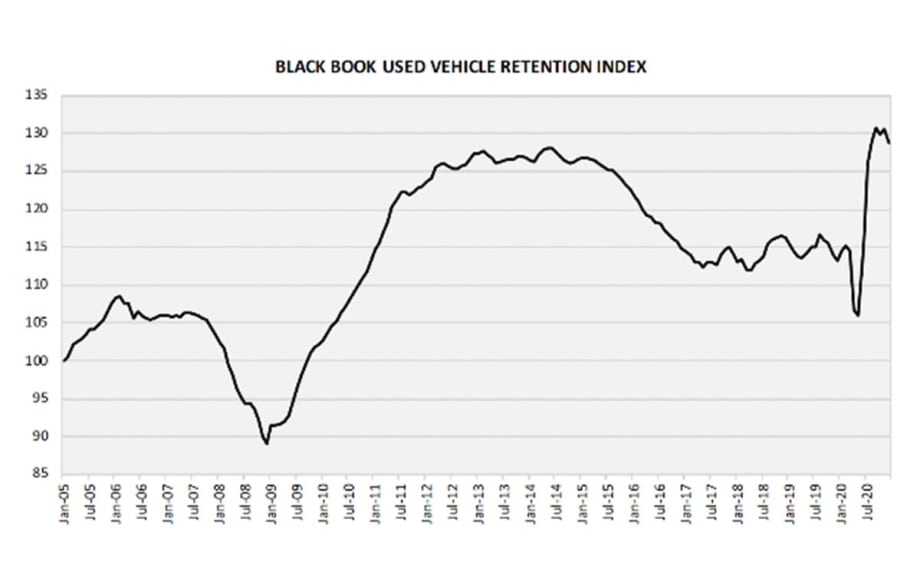
LAWRENCEVILLE, Ga. – Black Book, a division of Hearst that provides industry-leading used vehicle valuation and residual value forecast solutions, released its Used Vehicle Retention Index for December 2020 (128.8), a 1.8 point decline from November (130.6). Click here to obtain a copy of the latest index data. 

“The seasonally adjusted Retention Index has remained relatively stable since August,” said Alex Yurchenko, SVP, Data Science. “Nevertheless, due two record-setting summer months, the year ended with a 15.5-point (or 13.7%) year-over-year change in the Index. In fact, only the Minivan Segment did not have a year-over-year increase in the Index.”  

The Black Book Used Vehicle Retention Index is calculated using Black Book’s published Wholesale Average value on two- to six-year-old used vehicles, as percent of original typically-equipped MSRP. It is weighted based on registration volume and adjusted for seasonality, vehicle age, mileage, and condition. The Index offers an accurate, representative, and unbiased view of the strength of today’s used vehicle market values.   The Index dates to January 2005, where Black Book published a benchmark index value of 100.0 for the market. During 2008, the index dropped by 14.1% while during 2016, the index fell by just 6.4%. During 2011, the index rose strongly from 113.3 to 123.0 by the end of the year as the economy picked up steam and used vehicle values rose higher. It continued to remain relatively stable, rising slightly until May of 2014 when it hit a peak of 128.1. During 2020, we saw the largest drops and increases in the Index due to supply and demand pressures during the COVID-19 pandemic.   To obtain a copy of the latest Black Book Wholesale Value Index, please click here.  

Read: COVID-19 Market Insights

More Auto Finance

A hand holding small burlap money bags next to a toy red car, symbolizing auto financing, loan payments, and dealership profitability.
Auto Financeby StaffNovember 14, 2025

Report Uncovers $4.7B Opportunity for Auto Dealers

Solving mismatched payment quotes can boost sales, profits

Read More →
Industryby Hannah MitchellNovember 10, 2025

Auto Loans More in Reach

October easier to tap despite approval rates falling

Read More →
Industryby Hannah MitchellNovember 3, 2025

Q3 Auto Loans Reveal Stress

Data reflect growing finance activity on the extreme ends of credit risk scale

Read More →
Ad Loading...
Industryby Hannah MitchellOctober 15, 2025

Debt-Strapped Auto Consumers on the Rise

The amounts owed on under-water trade-ins reach new highs.

Read More →
F&Iby Hannah MitchellOctober 10, 2025

Helping the Credit-Crunched

Though many auto consumers are finding it challenging to trade, dealers can leverage conditions to help them get over the hump.

Read More →
IndustryJuly 31, 2025

Auto Borrower Divide Deepens

Recent patterns show good credit helps navigate high interest rates as highly leveraged consumers sink further.

Read More →
Ad Loading...
Industryby Hannah MitchellJuly 10, 2025

Auto Credit Easier to Get

June upticks still came with risky exposures.

Read More →
Industryby StaffJune 12, 2025

Auto Loans a Little Easier to Get

Slight May improvement came with risks to borrowers, lenders.

Read More →
F&Iby StaffJune 5, 2025

Auto Loan Delinquencies Fell in Q1

Experian report shows other shifts, including banks clawing back market share.

Read More →
Ad Loading...
Auto Financeby StaffMay 13, 2025

Auto Credit Picture Muddled

Overall April conditions didn’t benefit the consumer, especially those presenting more risk.

Read More →